Engineering Design
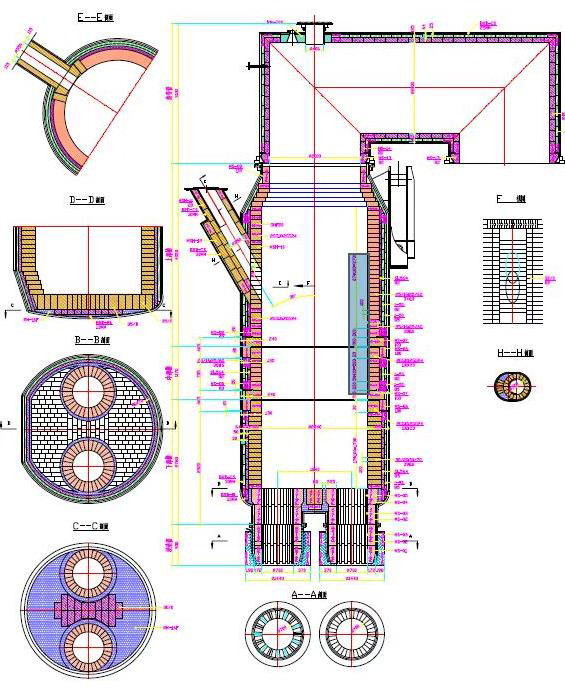
We deliver customized refractory and thermal designs for various steelmaking equipment to ensure system fit and longevity.
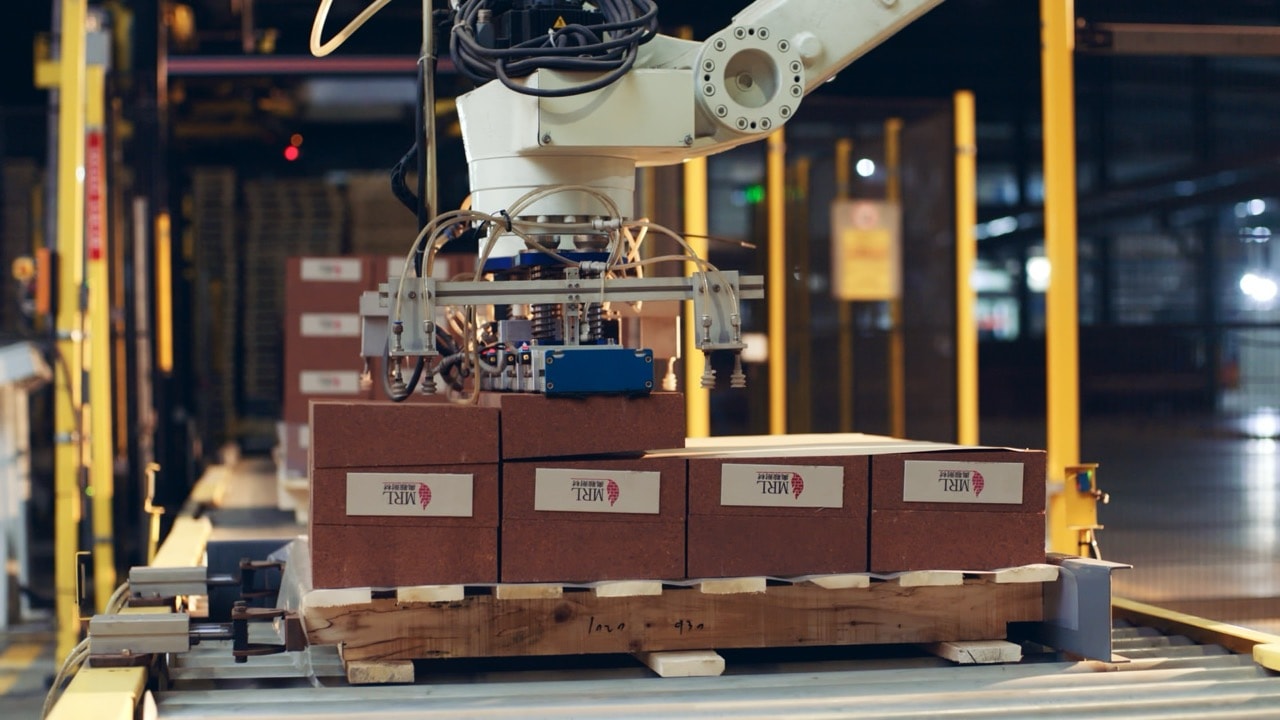
MRL is committed to delivering end-to-end refractory engineering for the steel industry, covering all critical vessels including RH degassers, VOD furnaces, AOD converters, EAFs, BOFs, and secondary refining ladles. We have established proven operational benchmarks across global steel production hubs, helping clients maximize campaign life, minimize maintenance-related downtime, and ensure high-efficiency, consistent steelmaking operations.
We deliver customized refractory and thermal designs for various steelmaking equipment to ensure system fit and longevity.
We offer a comprehensive portfolio of in-house developed refractory products, tailored for extreme furnace conditions.
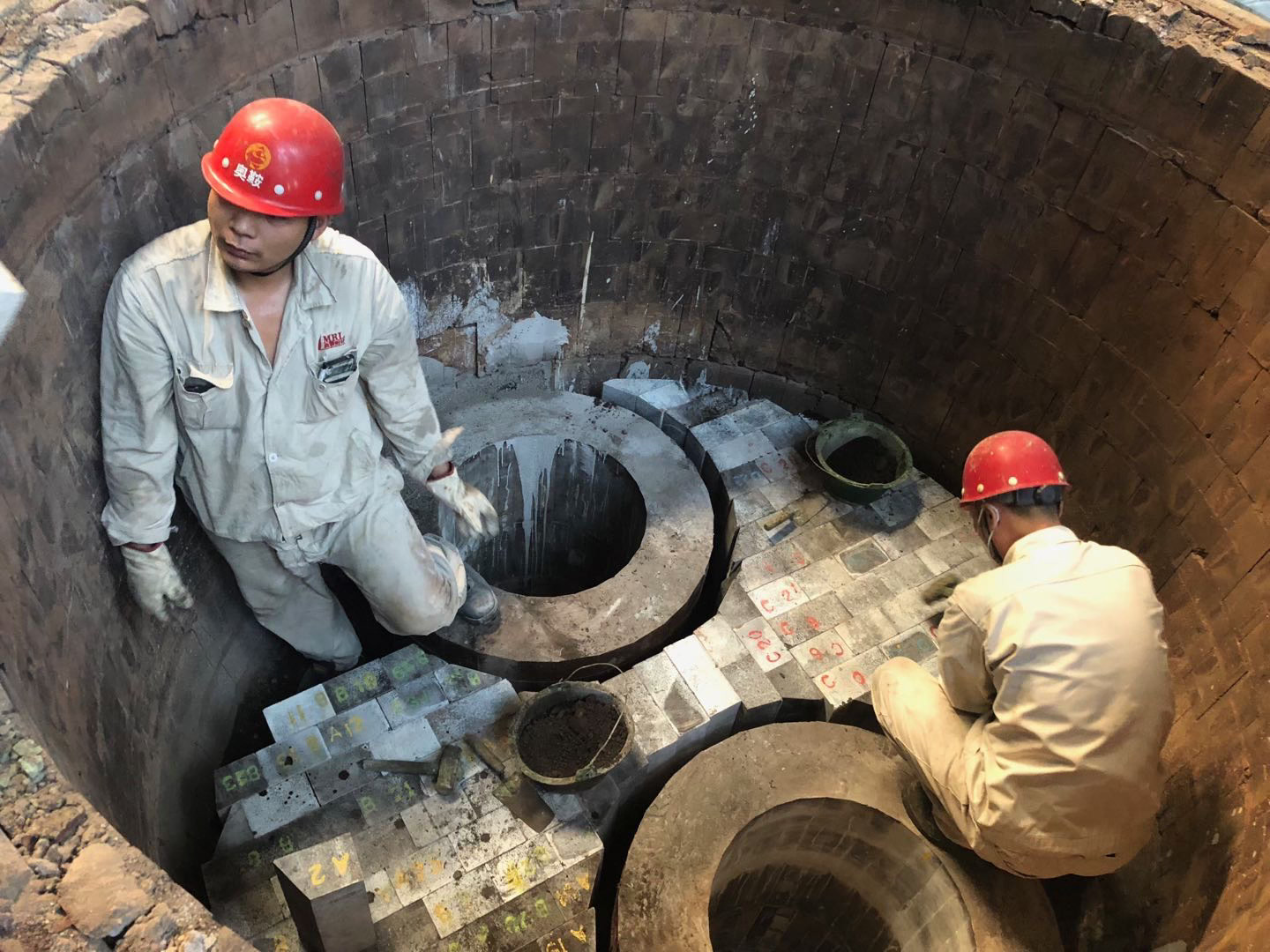
We deliver standardized installation, on-site support, and remote guidance to ensure construction quality and efficiency.
We provide full-cycle technical support to extend lining life, enhance performance, and reduce downtime risk.
Steelmaking involves extreme conditions where refractory performance impacts furnace life, steel cleanliness, and operational stability. MRL addresses these challenges and delivers tailored materials and full-service support to ensure long-lasting, efficient operations.
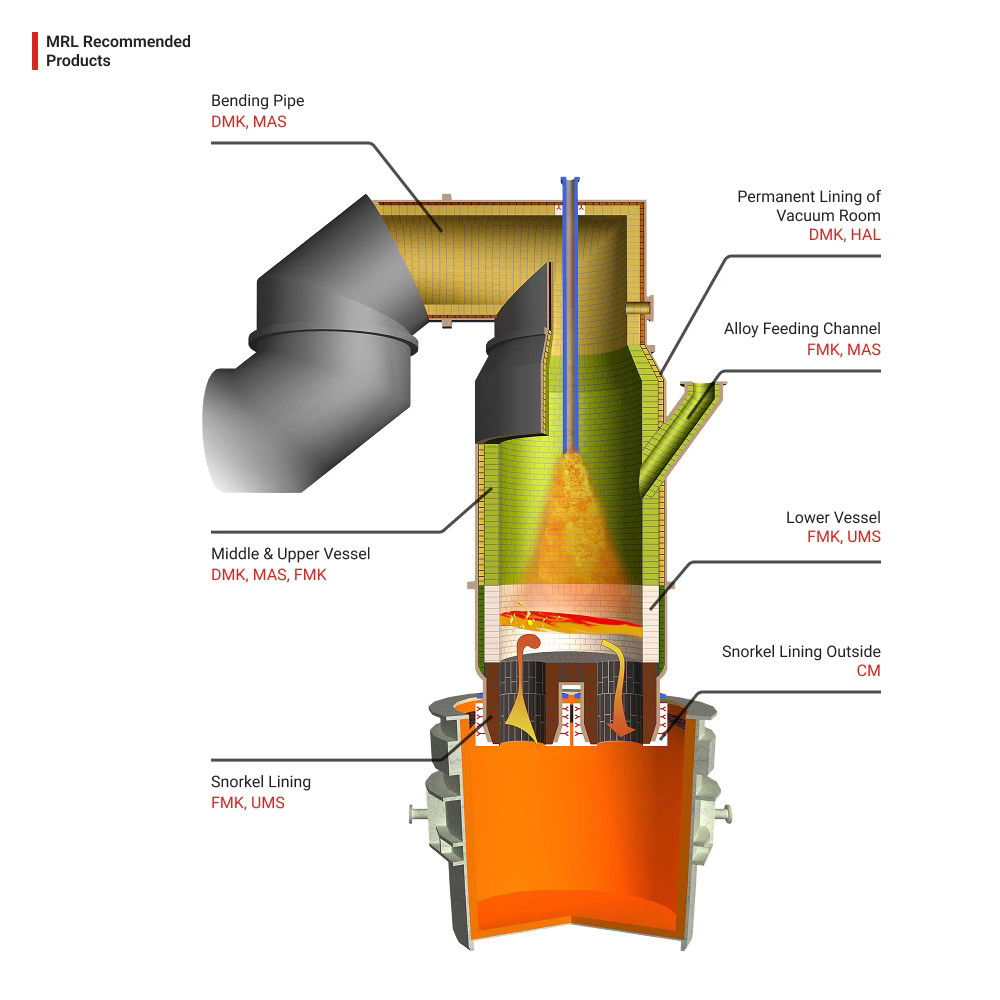
The RH vacuum degassing system is a vital component in secondary steel refining, widely used in the production of high-quality low-carbon steels, stainless steels, and specialty alloys. By enabling continuous degassing and deep purification of molten steel under vacuum conditions, the system significantly reduces gas content and inclusions, thereby improving steel cleanliness and mechanical properties. Its structure comprises immersion tubes, circulation pipes, lower and upper vessels, hot bends, vacuum chamber, and alloy feeding ports— all of which demand refractory materials with exceptional thermal resistance, mechanical strength, and corrosion performance.
Challenge & Solution
Immersion Tube
The immersion tube is the most vulnerable area, facing molten steel flow, argon stirring, and extreme thermal shocks. We apply FMK & UMS Series for the inner lining and CM Castables for the outer surface, delivering strong resistance to steel erosion, thermal shock, and reliable vacuum sealing.
Lower Vessel
The lower vessel withstands vacuum suction, steel erosion, and significant thermal and structural stress. Our FMK & UMS bricks are selected to maintain structural integrity and lining stability under vacuum conditions and intense steel impact.
Middle and Upper Vessels
The middle and upper vessels are exposed to alkaline vapors and thermal cycling, making them susceptible to fatigue. We utilize DMK, MAS & FMK grades designed for thermal cycling resistance and chemical stability in alkaline atmospheres.
Hot Bend
The hot bend experiences rapid temperature fluctuations, turbulent gas flow, and mechanical stress, often leading to cracking and accelerated wear. DMK & MAS materials provide controlled thermal expansion and strong resistance to gas erosion, ensuring long-term lining reliability.
Alloy Feeding Ports
The feeding port is subjected to repeated particle impact, mechanical abrasion, and localized thermal shock during alloy addition. FMK & MAS grades are applied to enhance impact resistance and reduce wear under frequent charging operations.
Vacuum Chamber Lining
The vacuum chamber lining must remain dimensionally stable under sustained high temperatures and alternating oxidizing- reducing atmospheres. DMK & HAL bricks form a stable, heat-resistant lining system that perserves structural strength and dimensional integrity over long campaigns.
Immersion Tube Sealing System
Vacuum leakage and interface instability are critical risks affecting RH system efficiency and operational safety. We integrate prefabricated SNK immersion tube systems with CM-16, CM-90 fillers and MM-10 sealing mortar to ensure airtight sealing and installation reliability.
Based on service conditions, MRL selects different grades and formulations even within the same series to ensure optimal performance by zone. Custom solutions are available—contact us for tailored support.
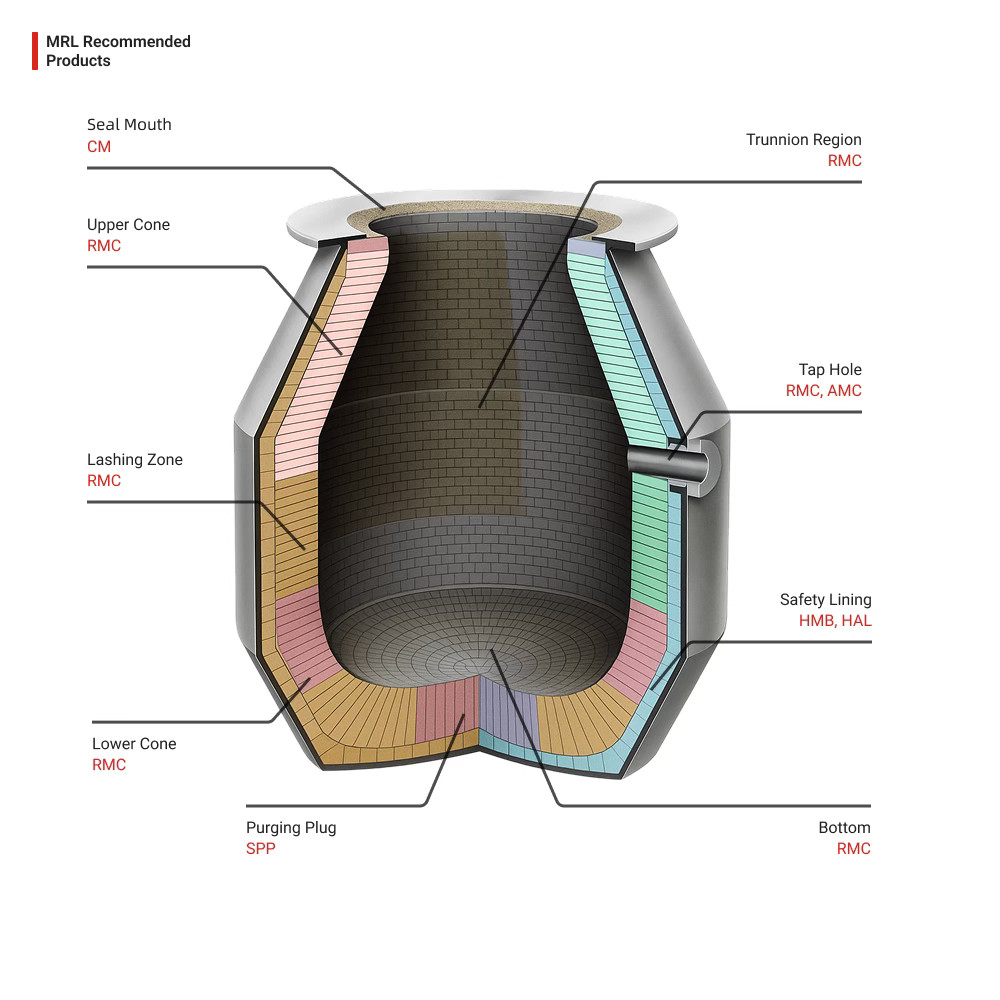
The Basic Oxygen Furnace (BOF) is one of the most critical units in modern converter steelmaking. By blowing high-pressure pure oxygen into hot metal, it efficiently oxidizes impurities, achieving rapid decarburization, desulfurization, and precise chemical control. It offers high production efficiency and superior reaction kinetics, making it widely used for large-scale carbon and alloy steel manufacturing. The extreme temperatures and fluctuating operating conditions demand exceptional thermal shock resistance, corrosion resistance, and structural strength from refractory materials.
Challenge & Solution
Upper Cone
In the upper cone, continuous exposure to oxygen jets and alkaline fumes places high demands on resistance to thermal fatigue and surface erosion; MRL applies RMC magnesia-carbon bricks to maintain structural integrity and thermal stability under intense oxidizing and high-temperature conditions.
Impact/ Lashing Zone
The impact / lashing zone is subjected to severe localized scouring and spalling caused by high-velocity molten steel, making it one of the fastest-wearing areas of the converter; RMC bricks provide strong erosion resistance and hot strength, effectively stabilizing lining performance in this critical working zone.
Lower Cone
At the lower cone, repeated slag and steel attack combined with cyclic thermal loading leads to stress concentration and lining instability; RMC materials offer a balanced response to slag corrosion and thermal shock, reducing structural fatigue and extending service life.
Bottom & Purging Area
In the bottom and purging area, the lining must withstand heavy thermal loads while purging components require stable strength and uniform permeability at high temperatures; MRL supports bottom stability with RMC bricks and ensures reliable gas flow using SPP purging plugs designed for high-temperature mechanical performance.
Trunnion Region
The trunnion region experiences continuous load bearing together with repeated thermal expansion and contraction, increasing the risk of joint loosening and fatigue failure; RMC bricks deliver high load-bearing capacity and fatigue resistance, maintaining long-term structural stability in this mechanically critical area.
Tap Hole
At the tap hole, frequent opening operations and direct molten steel flow demand excellent resistance to wear and chemical erosion; RMC and AMC materials provide durable protection against steel scouring and mechanical impact, ensuring stable tapping performance.
Safety Lining
As the final protective barrier, the safety lining must combine high strength, thermal stability, and low heat transfer to protect the converter shell; MRL selects HMB and HAL products to form a stable insulating layer capable of sustaining extreme operating conditions.
Based on service conditions, MRL selects different grades and formulations even within the same series to ensure optimal performance by zone. Custom solutions are available—contact us for tailored support.
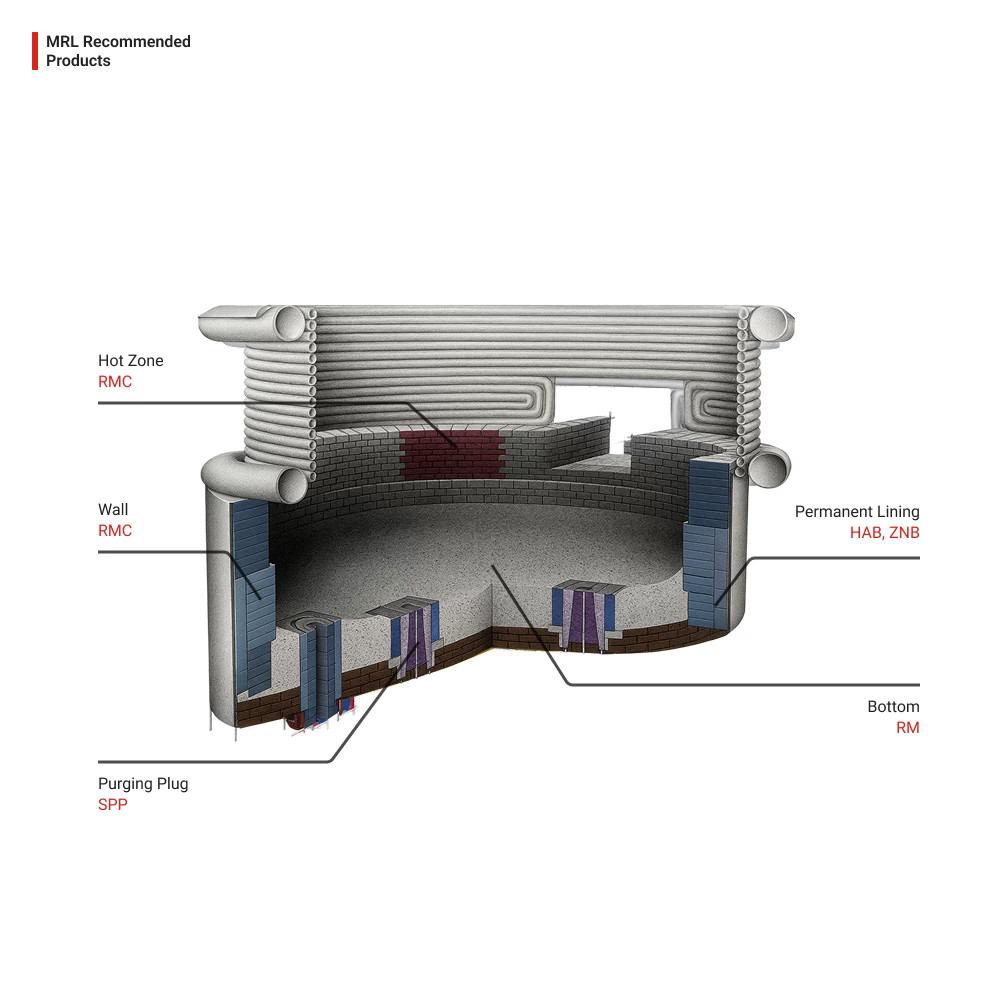
The electric arc furnace (EAF) is an efficient and flexible melting unit widely used in remelting scrap steel and refining specialty steels. Its core process relies on high-temperature arcs to directly heat the charge, making it ideal for variable raw materials and rapid production- especially in small-batch, multi-grade steelmaking. The furnace's complex structure- including sidewalls, bottom, hot spots, and porous plug system- is subjected to extreme heat and mechanical loads, demanding highly adaptive refractories.
Challenge & Solution
Hot Spots & Furnace Wall
In the hot zone and furnace wall, continuous exposure to intense arc radiation and molten pool erosion makes the lining highly susceptible to spalling, burnout, and thermal cracking; MRL applies RMC magnesia-carbon bricks to deliver strong slag resistance, excellent thermal shock stability, and reliable hot strength under severe thermal cycling.
Furnace Bottom
At the furnace bottom, slag accumulation, thermal reflux, and repeated impact loads place high demands on compressive strength and heat transfer performance; RM ramming mass provides a dense and stable bottom structure with flexible installation, helping extend service life and reduce maintenance frequency.
Purging Plug Zone
The purging plug zone is exposed to strong turbulence and high gas flow rates, leading to extreme localized wear around the plugs; SPP purging plugs are designed with high mechanical strength and stable porosity to ensure uniform gas distribution and reliable bottom-blowing performance.
Permanent Lining
As the structural foundation of the furnace, the permanent lining must maintain long-term thermal stability and structural integrity at high temperatures to prevent heat transfer damage to the shell; MRL selects HAB high-alumina bricks and ZNB fireclay bricks to form a low-conductivity, mechanically stable protective barrier.
Based on service conditions, MRL selects different grades and formulations even within the same series to ensure optimal performance by zone. Custom solutions are available—contact us for tailored support.
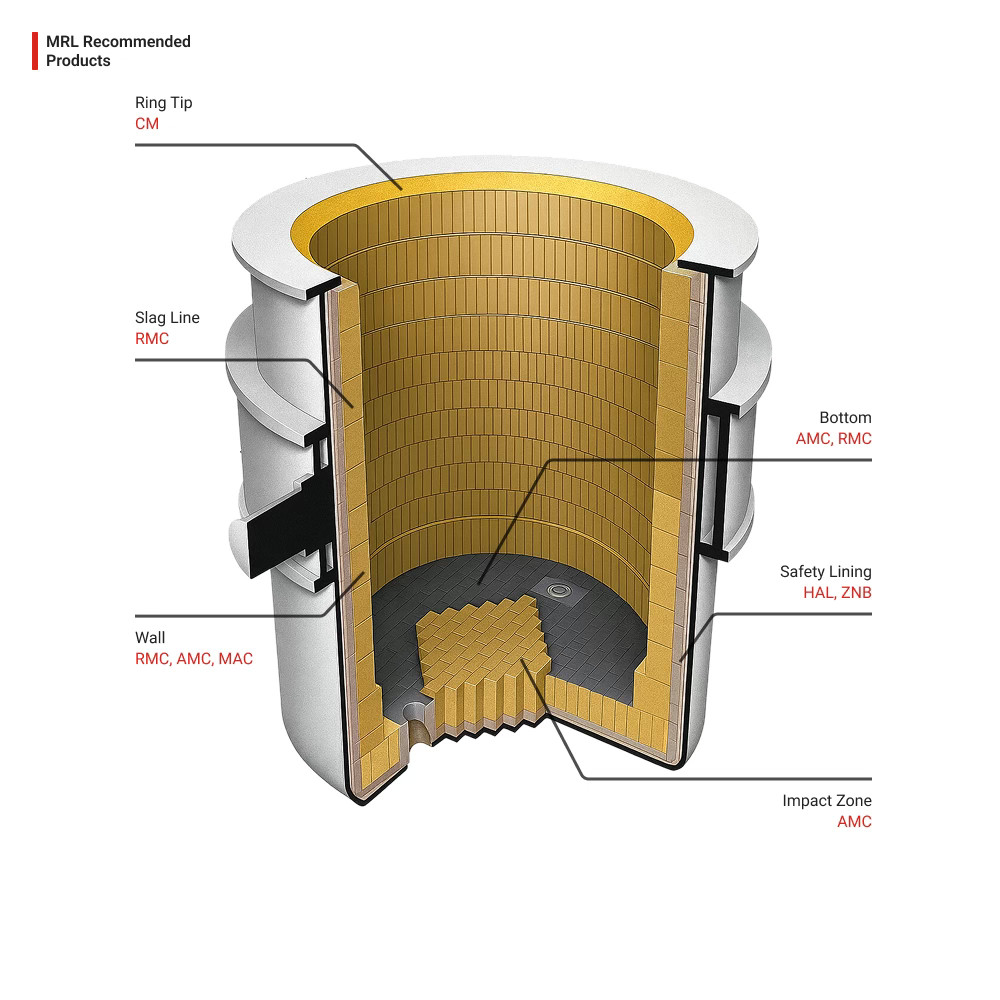
The ladle serves as a critical vessel in steelmaking, functioning not only as a transport unit but also as an essential platform for secondary refining operations. The selection and configuration of refractory linings play a decisive role in maintaining process stability, refining efficiency, and overall steel quality throughout ladle operations.
Challenge & Solution
Ring Tip
At the ring tip, continuous exposure to thermal radiation and molten steel/slag splashing leads to edge erosion and spalling; MRL applies CM castables to enhance thermal shock resistance and sealing reliability under frequent temperature fluctuations.
Slag Line
The slag line endures the most aggressive chemical attack and thermal load from corrosive slags, making it the most failure-prone zone; RMC magnesia-carbon bricks are selected to provide high hot strength and strong slag corrosion resistance.
Ladle Wall
The ladle wall must withstand significant static pressure from molten steel and repeated thermal cycling. Continuous immersion and steel penetration can induce internal stresses, leading to severe cracking and spalling over time. MRL configures RMC, AMC, and MAC bricks according to service conditions to provide superior density and penetration resistance, effectively balancing erosion resistance, thermal stability, and structural strength.
Bottom
At the bottom, concentrated thermal load and gravitational impact from molten steel inflow accelerate wear and structural degradation; AMC and RMC bricks are applied to enhance load-bearing capacity and corrosion resistance.
Impact Zone
The impact zone is subjected to direct molten steel turbulence, intense thermal shock, and mechanical erosion; AMC bricks are used to improve resistance to impact and stabilize lining performance.
Safety Lining
As the final protective barrier, the safety lining must provide reliable insulation and structural support under extreme conditions; HAL high-alumina bricks and ZNB fireclay bricks form a low-conductivity, mechanically stable protection layer.
Based on service conditions, MRL selects different grades and formulations even within the same series to ensure optimal performance by zone. Custom solutions are available—contact us for tailored support.
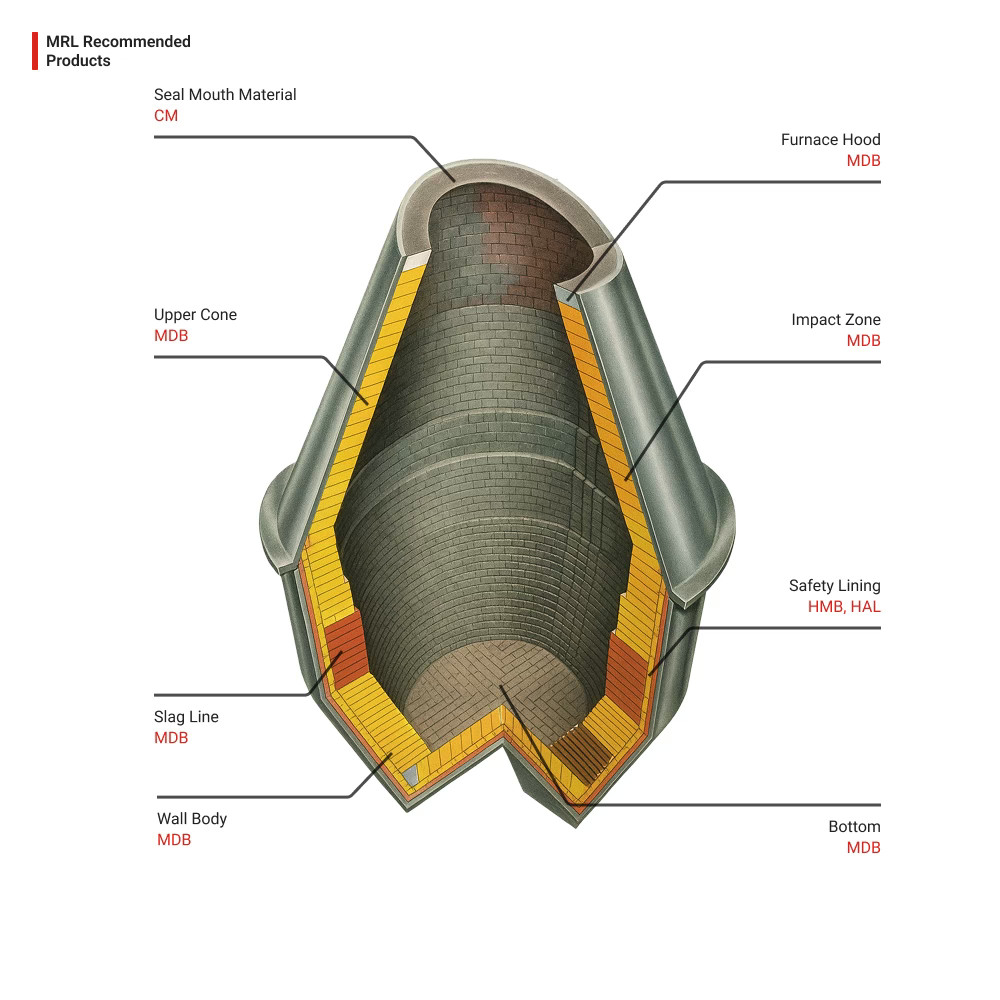
The Argon Oxygen Decarburization (AOD) Converter is a critical refining unit for stainless and high-alloy steel production. It refines and decarburizes molten steel by injecting a mixture of argon and oxygen through the bottom of the vessel. The process is performed under high temperatures, intense oxidation, and basic slag conditions- posing severe challenges to refractory linings, especially in high-stress areas such as tuyere zones, slag lines, and the furnace bottom.
Challenge & Solution
Seal Mouth
The seal mouth is subjected to hot gas flow and frequent temperature fluctuations, which can lead to seal degradation and surface spalling; MRL applies CM castables to ensure reliable sealing performance and stable thermal shock resistance.
Furnace Hood
The furnace hood operates continuously in oxidizing atmospheres and faces chemical attack and thermal cracking; MDB magnesia bricks are used to provide strong resistance to oxidation and thermal stress.
Wall Body
The wall body operates under combined exposure to molten steel and high-temperature gases, requiring resistance to chemical corrosion and thermal fatigue; MDB bricks enhance hot strength and long-term erosion resistance.
Slag Line
At the slag line, repeated contact with basic slags makes this one of the most vulnerable areas of the furnace; MDB bricks are applied to mitigate slag penetration and slow lining degradation.
Impact Zone
The impact zone experiences concentrated mechanical impact from alloy feeding and molten steel agitation, accelerating localized wear; MDB bricks are selected to improve impact resistance and erosion durability.
Bottom
The bottom withstands concentrated thermal load and structural stress from molten steel, making it prone to accelerated wear; MDB bricks provide the required structural strength and thermal stability.
Upper Cone
The upper cone is exposed to slag corrosion and cyclic thermal loads, where stress concentration can cause cracking and spalling; MDB bricks help stabilize the lining under repeated slag attack and thermal cycling.
Based on service conditions, MRL selects different grades and formulations even within the same series to ensure optimal performance by zone. Custom solutions are available—contact us for tailored support.
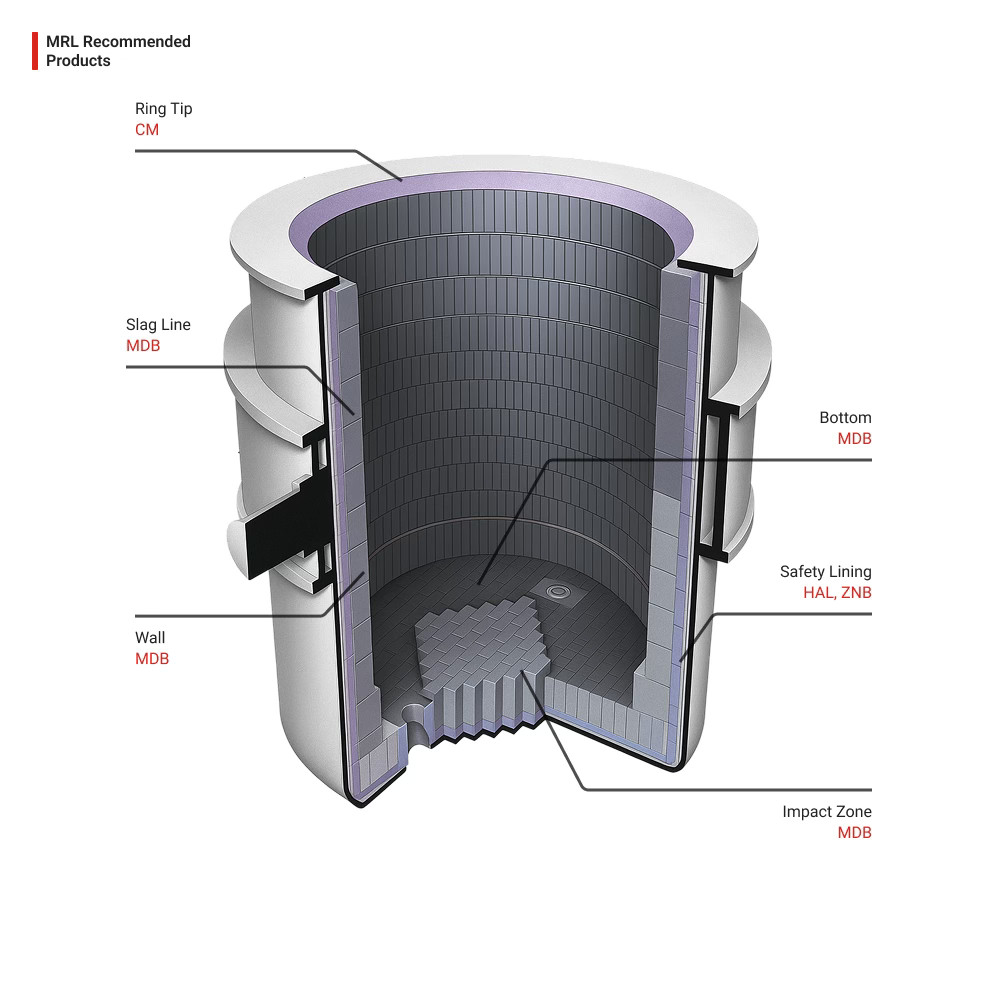
The Vacuum Oxygen Decarburization (VOD) furnace is a critical refining unit used in the production of ultra-low carbon stainless steels and special alloy grades. It achieves precise decarburization through a vacuum environment where argon is injected from the bottom and oxygen is blown from the top. This process efficiently reduces carbon and inclusion levels while preserving valuable alloying elements. Due to its demanding steel types and extreme fluctuations in temperature and atmosphere, the VOD furnace places exceptionally high requirements on refractory performance.
Challenge & Solution
Seal Mouth
The seal mouth is exposed to vacuum-pressure cycles and hot fumes, requiring excellent sealing reliability and thermal shock resistance; MRL applies CM castables to enhance sealing performance and maintain long-term vacuum integrity.
Impact Zone
The impact zone faces intense molten steel circulation and scouring, where thermal fatigue can accelerate wear and spalling; MDB magnesia bricks are used to provide strong resistance to molten steel attack and thermal shock.
Slag Line
At the slag line, repeated basic slag corrosion combined with temperature cycling can lead to spalling and structural cracking; MDB magnesia bricks ensure high resistance to slag penetration and thermal stress.
Wall
The wall operates under exposure to molten steel and reducing gases, demanding durability against slag attack, redox cycling, and thermal stress concentration; MDB magnesia bricks deliver high hot strength and abrasion resistance under these conditions.
Bottom
The bottom withstands heavy thermal load and mechanical impact from molten steel, requiring stable structural integrity and heat resistance; MDB bricks provide reliable impact resistance and thermal stability for long-term bottom performance.
Safety Lining
As the final protective barrier, the safety lining must balance low thermal conductivity with high mechanical strength and thermal stability; HAL high-alumina bricks and ZNB fireclay bricks form a structurally dependable protection layer for safe and sustained operation.
Based on service conditions, MRL selects different grades and formulations even within the same series to ensure optimal performance by zone. Custom solutions are available—contact us for tailored support.
MRL is committed to delivering end-to-end refractory engineering for the steel industry, covering all critical vessels including RH degassers, VOD furnaces, AOD converters, EAFs, BOFs, and secondary refining ladles. We have established proven operational benchmarks across global steel production hubs, helping clients maximize campaign life, minimize maintenance-related downtime, and ensure high-efficiency, consistent steelmaking operations.
We deliver customized refractory and thermal designs for various steelmaking equipment to ensure system fit and longevity.
We offer a comprehensive portfolio of in-house developed refractory products, tailored for extreme furnace conditions.
We deliver standardized installation, on-site support, and remote guidance to ensure construction quality and efficiency.
We provide full-cycle technical support to extend lining life, enhance performance, and reduce downtime risk.
Steelmaking involves extreme conditions where refractory performance impacts furnace life, steel cleanliness, and operational stability. MRL addresses these challenges and delivers tailored materials and full-service support to ensure long-lasting, efficient operations.

The RH vacuum degassing system is a vital component in secondary steel refining, widely used in the production of high-quality low-carbon steels, stainless steels, and specialty alloys. By enabling continuous degassing and deep purification of molten steel under vacuum conditions, the system significantly reduces gas content and inclusions, thereby improving steel cleanliness and mechanical properties. Its structure comprises immersion tubes, circulation pipes, lower and upper vessels, hot bends, vacuum chamber, and alloy feeding ports— all of which demand refractory materials with exceptional thermal resistance, mechanical strength, and corrosion performance.
Challenge & Solution
Immersion Tube
The immersion tube is the most vulnerable area, facing molten steel flow, argon stirring, and extreme thermal shocks. We apply FMK & UMS Series for the inner lining and CM Castables for the outer surface, delivering strong resistance to steel erosion, thermal shock, and reliable vacuum sealing.
Lower Vessel
The lower vessel withstands vacuum suction, steel erosion, and significant thermal and structural stress. Our FMK & UMS bricks are selected to maintain structural integrity and lining stability under vacuum conditions and intense steel impact.
Middle and Upper Vessels
The middle and upper vessels are exposed to alkaline vapors and thermal cycling, making them susceptible to fatigue. We utilize DMK, MAS & FMK grades designed for thermal cycling resistance and chemical stability in alkaline atmospheres.
Hot Bend
The hot bend experiences rapid temperature fluctuations, turbulent gas flow, and mechanical stress, often leading to cracking and accelerated wear. DMK & MAS materials provide controlled thermal expansion and strong resistance to gas erosion, ensuring long-term lining reliability.
Alloy Feeding Ports
The feeding port is subjected to repeated particle impact, mechanical abrasion, and localized thermal shock during alloy addition. FMK & MAS grades are applied to enhance impact resistance and reduce wear under frequent charging operations.
Vacuum Chamber Lining
The vacuum chamber lining must remain dimensionally stable under sustained high temperatures and alternating oxidizing- reducing atmospheres. DMK & HAL bricks form a stable, heat-resistant lining system that perserves structural strength and dimensional integrity over long campaigns.
Immersion Tube Sealing System
Vacuum leakage and interface instability are critical risks affecting RH system efficiency and operational safety. We integrate prefabricated SNK immersion tube systems with CM-16, CM-90 fillers and MM-10 sealing mortar to ensure airtight sealing and installation reliability.
Based on service conditions, MRL selects different grades and formulations even within the same series to ensure optimal performance by zone. Custom solutions are available—contact us for tailored support.
The Basic Oxygen Furnace (BOF) is one of the most critical units in modern converter steelmaking. By blowing high-pressure pure oxygen into hot metal, it efficiently oxidizes impurities, achieving rapid decarburization, desulfurization, and precise chemical control. It offers high production efficiency and superior reaction kinetics, making it widely used for large-scale carbon and alloy steel manufacturing. The extreme temperatures and fluctuating operating conditions demand exceptional thermal shock resistance, corrosion resistance, and structural strength from refractory materials.
Challenge & Solution
Upper Cone
In the upper cone, continuous exposure to oxygen jets and alkaline fumes places high demands on resistance to thermal fatigue and surface erosion; MRL applies RMC magnesia-carbon bricks to maintain structural integrity and thermal stability under intense oxidizing and high-temperature conditions.
Impact/ Lashing Zone
The impact / lashing zone is subjected to severe localized scouring and spalling caused by high-velocity molten steel, making it one of the fastest-wearing areas of the converter; RMC bricks provide strong erosion resistance and hot strength, effectively stabilizing lining performance in this critical working zone.
Lower Cone
At the lower cone, repeated slag and steel attack combined with cyclic thermal loading leads to stress concentration and lining instability; RMC materials offer a balanced response to slag corrosion and thermal shock, reducing structural fatigue and extending service life.
Bottom & Purging Area
In the bottom and purging area, the lining must withstand heavy thermal loads while purging components require stable strength and uniform permeability at high temperatures; MRL supports bottom stability with RMC bricks and ensures reliable gas flow using SPP purging plugs designed for high-temperature mechanical performance.
Trunnion Region
The trunnion region experiences continuous load bearing together with repeated thermal expansion and contraction, increasing the risk of joint loosening and fatigue failure; RMC bricks deliver high load-bearing capacity and fatigue resistance, maintaining long-term structural stability in this mechanically critical area.
Tap Hole
At the tap hole, frequent opening operations and direct molten steel flow demand excellent resistance to wear and chemical erosion; RMC and AMC materials provide durable protection against steel scouring and mechanical impact, ensuring stable tapping performance.
Safety Lining
As the final protective barrier, the safety lining must combine high strength, thermal stability, and low heat transfer to protect the converter shell; MRL selects HMB and HAL products to form a stable insulating layer capable of sustaining extreme operating conditions.
Based on service conditions, MRL selects different grades and formulations even within the same series to ensure optimal performance by zone. Custom solutions are available—contact us for tailored support.
The electric arc furnace (EAF) is an efficient and flexible melting unit widely used in remelting scrap steel and refining specialty steels. Its core process relies on high-temperature arcs to directly heat the charge, making it ideal for variable raw materials and rapid production- especially in small-batch, multi-grade steelmaking. The furnace's complex structure- including sidewalls, bottom, hot spots, and porous plug system- is subjected to extreme heat and mechanical loads, demanding highly adaptive refractories.
Challenge & Solution
Hot Spots & Furnace Wall
In the hot zone and furnace wall, continuous exposure to intense arc radiation and molten pool erosion makes the lining highly susceptible to spalling, burnout, and thermal cracking; MRL applies RMC magnesia-carbon bricks to deliver strong slag resistance, excellent thermal shock stability, and reliable hot strength under severe thermal cycling.
Furnace Bottom
At the furnace bottom, slag accumulation, thermal reflux, and repeated impact loads place high demands on compressive strength and heat transfer performance; RM ramming mass provides a dense and stable bottom structure with flexible installation, helping extend service life and reduce maintenance frequency.
Purging Plug Zone
The purging plug zone is exposed to strong turbulence and high gas flow rates, leading to extreme localized wear around the plugs; SPP purging plugs are designed with high mechanical strength and stable porosity to ensure uniform gas distribution and reliable bottom-blowing performance.
Permanent Lining
As the structural foundation of the furnace, the permanent lining must maintain long-term thermal stability and structural integrity at high temperatures to prevent heat transfer damage to the shell; MRL selects HAB high-alumina bricks and ZNB fireclay bricks to form a low-conductivity, mechanically stable protective barrier.
Based on service conditions, MRL selects different grades and formulations even within the same series to ensure optimal performance by zone. Custom solutions are available—contact us for tailored support.
The ladle serves as a critical vessel in steelmaking, functioning not only as a transport unit but also as an essential platform for secondary refining operations. The selection and configuration of refractory linings play a decisive role in maintaining process stability, refining efficiency, and overall steel quality throughout ladle operations.
Challenge & Solution
Ring Tip
At the ring tip, continuous exposure to thermal radiation and molten steel/slag splashing leads to edge erosion and spalling; MRL applies CM castables to enhance thermal shock resistance and sealing reliability under frequent temperature fluctuations.
Slag Line
The slag line endures the most aggressive chemical attack and thermal load from corrosive slags, making it the most failure-prone zone; RMC magnesia-carbon bricks are selected to provide high hot strength and strong slag corrosion resistance.
Ladle Wall
The ladle wall must withstand significant static pressure from molten steel and repeated thermal cycling. Continuous immersion and steel penetration can induce internal stresses, leading to severe cracking and spalling over time. MRL configures RMC, AMC, and MAC bricks according to service conditions to provide superior density and penetration resistance, effectively balancing erosion resistance, thermal stability, and structural strength.
Bottom
At the bottom, concentrated thermal load and gravitational impact from molten steel inflow accelerate wear and structural degradation; AMC and RMC bricks are applied to enhance load-bearing capacity and corrosion resistance.
Impact Zone
The impact zone is subjected to direct molten steel turbulence, intense thermal shock, and mechanical erosion; AMC bricks are used to improve resistance to impact and stabilize lining performance.
Safety Lining
As the final protective barrier, the safety lining must provide reliable insulation and structural support under extreme conditions; HAL high-alumina bricks and ZNB fireclay bricks form a low-conductivity, mechanically stable protection layer.
Based on service conditions, MRL selects different grades and formulations even within the same series to ensure optimal performance by zone. Custom solutions are available—contact us for tailored support.
The Argon Oxygen Decarburization (AOD) Converter is a critical refining unit for stainless and high-alloy steel production. It refines and decarburizes molten steel by injecting a mixture of argon and oxygen through the bottom of the vessel. The process is performed under high temperatures, intense oxidation, and basic slag conditions- posing severe challenges to refractory linings, especially in high-stress areas such as tuyere zones, slag lines, and the furnace bottom.
Challenge & Solution
Upper Cone
The upper cone is exposed to slag corrosion and cyclic thermal loads, where stress concentration can cause cracking and spalling; MDB bricks help stabilize the lining under repeated slag attack and thermal cycling.
Impact Zone
The impact zone experiences concentrated mechanical impact from alloy feeding and molten steel agitation, accelerating localized wear; MDB bricks are selected to improve impact resistance and erosion durability.
Slag Line
At the slag line, repeated contact with basic slags makes this one of the most vulnerable areas of the furnace; MDB bricks are applied to mitigate slag penetration and slow lining degradation.
Wall Body
The wall body operates under combined exposure to molten steel and high-temperature gases, requiring resistance to chemical corrosion and thermal fatigue; MDB bricks enhance hot strength and long-term erosion resistance.
Bottom
The bottom withstands concentrated thermal load and structural stress from molten steel, making it prone to accelerated wear; MDB bricks provide the required structural strength and thermal stability.
Slag Line
Furnace Hood
The furnace hood operates continuously in oxidizing atmospheres and faces chemical attack and thermal cracking; MDB magnesia bricks are used to provide strong resistance to oxidation and thermal stress.
Seal Mouth
The seal mouth is subjected to hot gas flow and frequent temperature fluctuations, which can lead to seal degradation and surface spalling; MRL applies CM castables to ensure reliable sealing performance and stable thermal shock resistance.
Based on service conditions, MRL selects different grades and formulations even within the same series to ensure optimal performance by zone. Custom solutions are available—contact us for tailored support.
The Vacuum Oxygen Decarburization (VOD) furnace is a critical refining unit used in the production of ultra-low carbon stainless steels and special alloy grades. It achieves precise decarburization through a vacuum environment where argon is injected from the bottom and oxygen is blown from the top. This process efficiently reduces carbon and inclusion levels while preserving valuable alloying elements. Due to its demanding steel types and extreme fluctuations in temperature and atmosphere, the VOD furnace places exceptionally high requirements on refractory performance.
Challenge & Solution
Seal Mouth
The seal mouth is exposed to vacuum-pressure cycles and hot fumes, requiring excellent sealing reliability and thermal shock resistance; MRL applies CM castables to enhance sealing performance and maintain long-term vacuum integrity.
Impact Zone
The impact zone faces intense molten steel circulation and scouring, where thermal fatigue can accelerate wear and spalling; MDB magnesia bricks are used to provide strong resistance to molten steel attack and thermal shock.
Slag Line
At the slag line, repeated basic slag corrosion combined with temperature cycling can lead to spalling and structural cracking; MDB magnesia bricks ensure high resistance to slag penetration and thermal stress.
Wall
The wall operates under exposure to molten steel and reducing gases, demanding durability against slag attack, redox cycling, and thermal stress concentration; MDB magnesia bricks deliver high hot strength and abrasion resistance under these conditions.
Bottom
The bottom withstands heavy thermal load and mechanical impact from molten steel, requiring stable structural integrity and heat resistance; MDB bricks provide reliable impact resistance and thermal stability for long-term bottom performance.
Safety Lining
As the final protective barrier, the safety lining must balance low thermal conductivity with high mechanical strength and thermal stability; HAL high-alumina bricks and ZNB fireclay bricks form a structurally dependable protection layer for safe and sustained operation.
Based on service conditions, MRL selects different grades and formulations even within the same series to ensure optimal performance by zone. Custom solutions are available—contact us for tailored support.
MRL is committed to delivering end-to-end refractory engineering for the steel industry, covering all critical vessels including RH degassers, VOD furnaces, AOD converters, EAFs, BOFs, and secondary refining ladles. We have established proven operational benchmarks across global steel production hubs, helping clients maximize campaign life, minimize maintenance-related downtime, and ensure high-efficiency, consistent steelmaking operations.
We deliver customized refractory and thermal designs for various steelmaking equipment to ensure system fit and longevity.
We offer a comprehensive portfolio of in-house developed refractory products, tailored for extreme furnace conditions.
We deliver standardized installation, on-site support, and remote guidance to ensure construction quality and efficiency.
We provide full-cycle technical support to extend lining life, enhance performance, and reduce downtime risk.
Steelmaking involves extreme conditions where refractory performance impacts furnace life, steel cleanliness, and operational stability. MRL addresses these challenges and delivers tailored materials and full-service support to ensure long-lasting, efficient operations.
The RH vacuum degassing system is a vital component in secondary steel refining, widely used in the production of high-quality low-carbon steels, stainless steels, and specialty alloys. By enabling continuous degassing and deep purification of molten steel under vacuum conditions, the system significantly reduces gas content and inclusions, thereby improving steel cleanliness and mechanical properties. Its structure comprises immersion tubes, circulation pipes, lower and upper vessels, hot bends, vacuum chamber, and alloy feeding ports— all of which demand refractory materials with exceptional thermal resistance, mechanical strength, and corrosion performance.
Challenge & Solution
Immersion Tube
The immersion tube is the most vulnerable area, facing molten steel flow, argon stirring, and extreme thermal shocks. We apply FMK & UMS Series for the inner lining and CM Castables for the outer surface, delivering strong resistance to steel erosion, thermal shock, and reliable vacuum sealing.
Lower Vessel
The lower vessel withstands vacuum suction, steel erosion, and significant thermal and structural stress. Our FMK & UMS bricks are selected to maintain structural integrity and lining stability under vacuum conditions and intense steel impact.
Middle and Upper Vessels
The middle and upper vessels are exposed to alkaline vapors and thermal cycling, making them susceptible to fatigue. We utilize DMK, MAS & FMK grades designed for thermal cycling resistance and chemical stability in alkaline atmospheres.
Hot Bend
The hot bend experiences rapid temperature fluctuations, turbulent gas flow, and mechanical stress, often leading to cracking and accelerated wear. DMK & MAS materials provide controlled thermal expansion and strong resistance to gas erosion, ensuring long-term lining reliability.
Alloy Feeding Ports
The feeding port is subjected to repeated particle impact, mechanical abrasion, and localized thermal shock during alloy addition. FMK & MAS grades are applied to enhance impact resistance and reduce wear under frequent charging operations.
Vacuum Chamber Lining
The vacuum chamber lining must remain dimensionally stable under sustained high temperatures and alternating oxidizing- reducing atmospheres. DMK & HAL bricks form a stable, heat-resistant lining system that perserves structural strength and dimensional integrity over long campaigns.
Immersion Tube Sealing System
Vacuum leakage and sealing failure are critical risks affecting RH system efficiency and operational safety. We integrate prefabricated SNK immersion tube systems with CM-16, CM-90 fillers and MM-10 sealing mortar to ensure airtight sealing and installation reliability. c
Based on service conditions, MRL selects different grades and formulations even within the same series to ensure optimal performance by zone. Custom solutions are available—contact us for tailored support.
The Basic Oxygen Furnace (BOF) is one of the most critical units in modern converter steelmaking. By blowing high-pressure pure oxygen into hot metal, it efficiently oxidizes impurities, achieving rapid decarburization, desulfurization, and precise chemical control. It offers high production efficiency and superior reaction kinetics, making it widely used for large-scale carbon and alloy steel manufacturing. The extreme temperatures and fluctuating operating conditions demand exceptional thermal shock resistance, corrosion resistance, and structural strength from refractory materials.
Challenge & Solution
Upper Cone
In the upper cone, continuous exposure to oxygen jets and alkaline fumes places high demands on resistance to thermal fatigue and surface erosion; MRL applies RMC magnesia-carbon bricks to maintain structural integrity and thermal stability under intense oxidizing and high-temperature conditions.
Impact/ Lashing Zone
The impact / lashing zone is subjected to severe localized scouring and spalling caused by high-velocity molten steel, making it one of the fastest-wearing areas of the converter; RMC bricks provide strong erosion resistance and hot strength, effectively stabilizing lining performance in this critical working zone.
Lower Cone
At the lower cone, repeated slag and steel attack combined with cyclic thermal loading leads to stress concentration and lining instability; RMC materials offer a balanced response to slag corrosion and thermal shock, reducing structural fatigue and extending service life.
Bottom & Purging Area
In the bottom and purging area, the lining must withstand heavy thermal loads while purging components require stable strength and uniform permeability at high temperatures; MRL supports bottom stability with RMC bricks and ensures reliable gas flow using SPP purging plugs designed for high-temperature mechanical performance.
Trunnion Region
The trunnion region experiences continuous load bearing together with repeated thermal expansion and contraction, increasing the risk of joint loosening and fatigue failure; RMC bricks deliver high load-bearing capacity and fatigue resistance, maintaining long-term structural stability in this mechanically critical area.
Tap Hole
At the tap hole, frequent opening operations and direct molten steel flow demand excellent resistance to wear and chemical erosion; RMC and AMC materials provide durable protection against steel scouring and mechanical impact, ensuring stable tapping performance.
Safety Lining
As the final protective barrier, the safety lining must combine high strength, thermal stability, and low heat transfer to protect the converter shell; MRL selects HMB and HAL products to form a stable insulating layer capable of sustaining extreme operating conditions.
Based on service conditions, MRL selects different grades and formulations even within the same series to ensure optimal performance by zone. Custom solutions are available—contact us for tailored support.
The electric arc furnace (EAF) is an efficient and flexible melting unit widely used in remelting scrap steel and refining specialty steels. Its core process relies on high-temperature arcs to directly heat the charge, making it ideal for variable raw materials and rapid production- especially in small-batch, multi-grade steelmaking. The furnace's complex structure- including sidewalls, bottom, hot spots, and porous plug system- is subjected to extreme heat and mechanical loads, demanding highly adaptive refractories.
Challenge & Solution
Hot Spots & Furnace Wall
In the hot zone and furnace wall, continuous exposure to intense arc radiation and molten pool erosion makes the lining highly susceptible to spalling, burnout, and thermal cracking; MRL applies RMC magnesia-carbon bricks to deliver strong slag resistance, excellent thermal shock stability, and reliable hot strength under severe thermal cycling.
Furnace Bottom
At the furnace bottom, slag accumulation, thermal reflux, and repeated impact loads place high demands on compressive strength and heat transfer performance; RM ramming mass provides a dense and stable bottom structure with flexible installation, helping extend service life and reduce maintenance frequency.
Purging Plug Zone
The purging plug zone is exposed to strong turbulence and high gas flow rates, leading to extreme localized wear around the plugs; SPP purging plugs are designed with high mechanical strength and stable porosity to ensure uniform gas distribution and reliable bottom-blowing performance.
Permanent Lining
As the structural foundation of the furnace, the permanent lining must maintain long-term thermal stability and structural integrity at high temperatures to prevent heat transfer damage to the shell; MRL selects HAB high-alumina bricks and ZNB fireclay bricks to form a low-conductivity, mechanically stable protective barrier.
Based on service conditions, MRL selects different grades and formulations even within the same series to ensure optimal performance by zone. Custom solutions are available—contact us for tailored support.
The ladle serves as a critical vessel in steelmaking, functioning not only as a transport unit but also as an essential platform for secondary refining operations. The selection and configuration of refractory linings play a decisive role in maintaining process stability, refining efficiency, and overall steel quality throughout ladle operations.
Challenge & Solution
Ring Tip
At the ring tip, continuous exposure to thermal radiation and molten steel/slag splashing leads to edge erosion and spalling; MRL applies CM castables to enhance thermal shock resistance and sealing reliability under frequent temperature fluctuations.
Slag Line
The slag line endures the most aggressive chemical attack and thermal load from corrosive slags, making it the most failure-prone zone; RMC magnesia-carbon bricks are selected to provide high hot strength and strong slag corrosion resistance.
Ladle Wall
The ladle wall must withstand significant static pressure from molten steel and repeated thermal cycling. Continuous immersion and steel penetration can induce internal stresses, leading to severe cracking and spalling over time. MRL configures RMC, AMC, and MAC bricks according to service conditions to provide superior density and penetration resistance, effectively balancing erosion resistance, thermal stability, and structural strength.
Bottom
At the bottom, concentrated thermal load and gravitational impact from molten steel inflow accelerate wear and structural degradation; AMC and RMC bricks are applied to enhance load-bearing capacity and corrosion resistance.
Impact Zone
The impact zone is subjected to direct molten steel turbulence, intense thermal shock, and mechanical erosion; AMC bricks are used to improve resistance to impact and stabilize lining performance.
Safety Lining
As the final protective barrier, the safety lining must provide reliable insulation and structural support under extreme conditions; HAL high-alumina bricks and ZNB fireclay bricks form a low-conductivity, mechanically stable protection layer.
Based on service conditions, MRL selects different grades and formulations even within the same series to ensure optimal performance by zone. Custom solutions are available—contact us for tailored support.
The Argon Oxygen Decarburization (AOD) Converter is a critical refining unit for stainless and high-alloy steel production. It refines and decarburizes molten steel by injecting a mixture of argon and oxygen through the bottom of the vessel. The process is performed under high temperatures, intense oxidation, and basic slag conditions- posing severe challenges to refractory linings, especially in high-stress areas such as tuyere zones, slag lines, and the furnace bottom.
Challenge & Solution
Seal Mouth
The seal mouth is subjected to hot gas flow and frequent temperature fluctuations, which can lead to seal degradation and surface spalling; MRL applies CM castables to ensure reliable sealing performance and stable thermal shock resistance.
Furnace Hood
The furnace hood operates continuously in oxidizing atmospheres and faces chemical attack and thermal cracking; MDB magnesia bricks are used to provide strong resistance to oxidation and thermal stress.
Upper Cone
The upper cone is exposed to slag corrosion and cyclic thermal loads, where stress concentration can cause cracking and spalling; MDB bricks help stabilize the lining under repeated slag attack and thermal cycling.
Impact Zone
The impact zone experiences concentrated mechanical impact from alloy feeding and molten steel agitation, accelerating localized wear; MDB bricks are selected to improve impact resistance and erosion durability.
Slag Line
At the slag line, repeated contact with basic slags makes this one of the most vulnerable areas of the furnace; MDB bricks are applied to mitigate slag penetration and slow lining degradation.
Wall Body
The wall body operates under combined exposure to molten steel and high-temperature gases, requiring resistance to chemical corrosion and thermal fatigue; MDB bricks enhance hot strength and long-term erosion resistance.
Bottom
The bottom withstands concentrated thermal load and structural stress from molten steel, making it prone to accelerated wear; MDB bricks provide the required structural strength and thermal stability.
Based on service conditions, MRL selects different grades and formulations even within the same series to ensure optimal performance by zone. Custom solutions are available—contact us for tailored support.
The Vacuum Oxygen Decarburization (VOD) furnace is a critical refining unit used in the production of ultra-low carbon stainless steels and special alloy grades. It achieves precise decarburization through a vacuum environment where argon is injected from the bottom and oxygen is blown from the top. This process efficiently reduces carbon and inclusion levels while preserving valuable alloying elements. Due to its demanding steel types and extreme fluctuations in temperature and atmosphere, the VOD furnace places exceptionally high requirements on refractory performance.
Challenge & Solution
Seal Mouth
The seal mouth is exposed to vacuum-pressure cycles and hot fumes, requiring excellent sealing reliability and thermal shock resistance; MRL applies CM castables to enhance sealing performance and maintain long-term vacuum integrity.
Impact Zone
The impact zone faces intense molten steel circulation and scouring, where thermal fatigue can accelerate wear and spalling; MDB magnesia bricks are used to provide strong resistance to molten steel attack and thermal shock.
Slag Line
At the slag line, repeated basic slag corrosion combined with temperature cycling can lead to spalling and structural cracking; MDB magnesia bricks ensure high resistance to slag penetration and thermal stress.
Wall
The wall operates under exposure to molten steel and reducing gases, demanding durability against slag attack, redox cycling, and thermal stress concentration; MDB magnesia bricks deliver high hot strength and abrasion resistance under these conditions.
Bottom
The bottom withstands heavy thermal load and mechanical impact from molten steel, requiring stable structural integrity and heat resistance; MDB bricks provide reliable impact resistance and thermal stability for long-term bottom performance.
Safety Lining
As the final protective barrier, the safety lining must balance low thermal conductivity with high mechanical strength and thermal stability; HAL high-alumina bricks and ZNB fireclay bricks form a structurally dependable protection layer for safe and sustained operation.
Based on service conditions, MRL selects different grades and formulations even within the same series to ensure optimal performance by zone. Custom solutions are available—contact us for tailored support.