Engineering Design
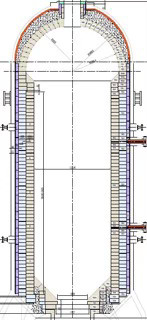
We provide customized refractory layout design for gasification systems to ensure precise heat-flow control and lining reliability.
MRL provides high-performance refractory solutions tailored for advanced gasification systems, partnering with global leaders in the coal chemical and energy sectors. Leveraging proven field experience in extreme environments characterized by high temperatures, intense pressures, and severe slag abrasion, our refractories are engineered to excel across diverse gasifier designs and volatile operating conditions. By maximizing lining service life and minimizing unscheduled downtime, MRL ensures operational reliability, helping customers achieve stable, efficient, and sustained throughput in their gasification processes.
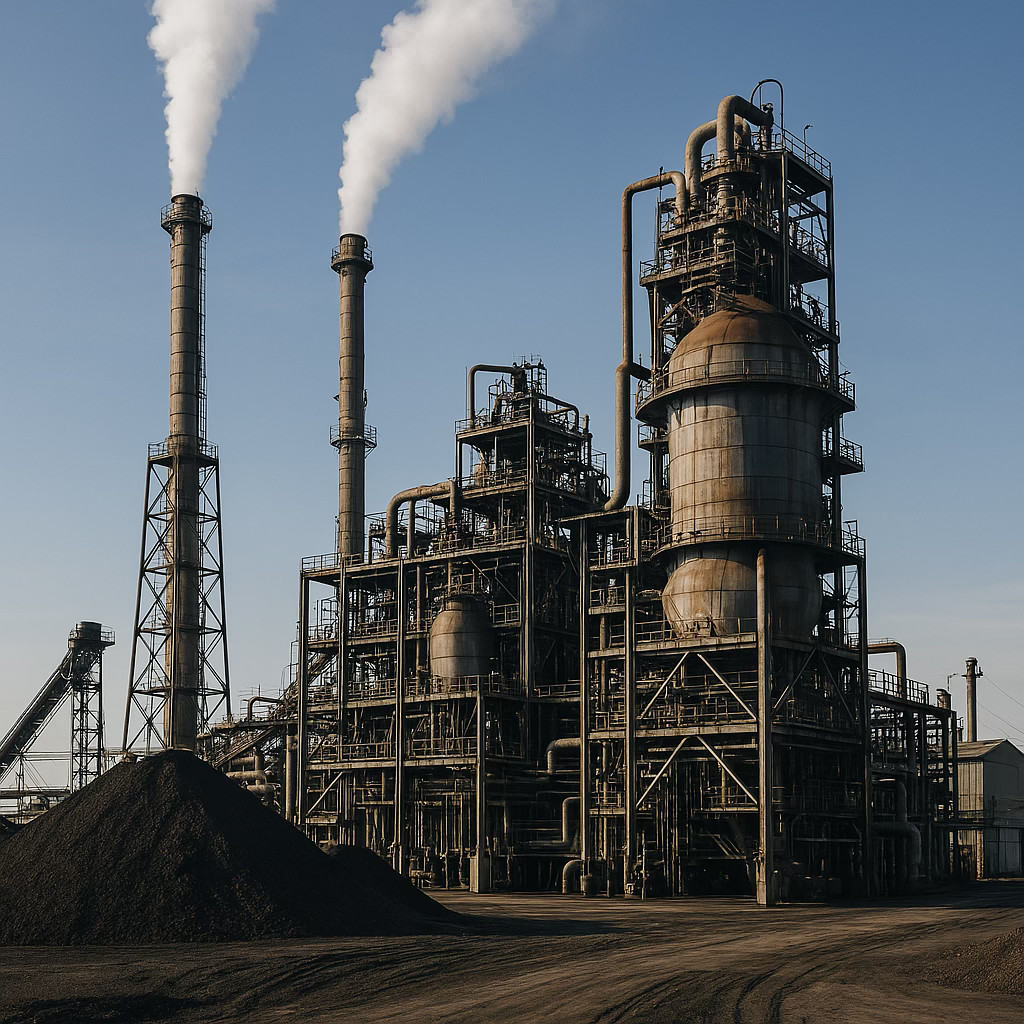
We provide customized refractory layout design for gasification systems to ensure precise heat-flow control and lining reliability.
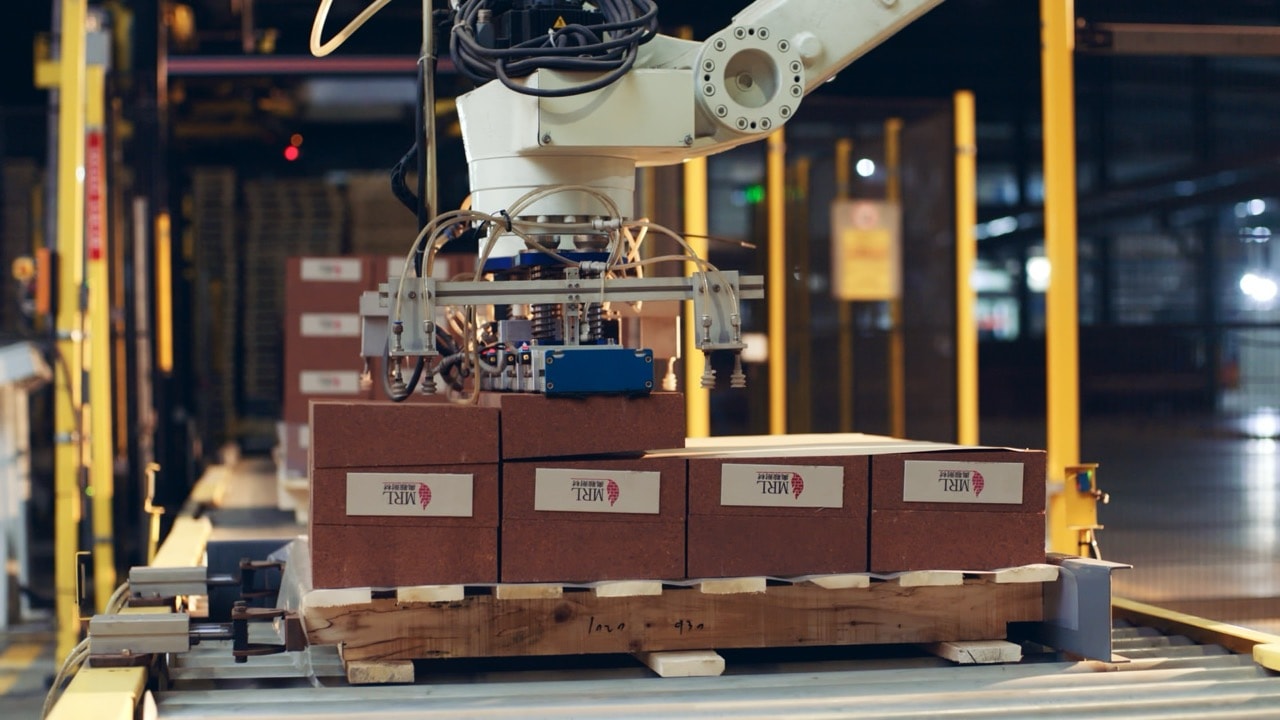
We supply premium refractories engineered for extreme gasifier environments, with documented performance across major global projects.
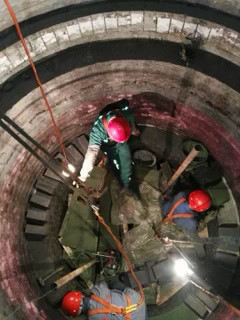
We ensure standardized execution through on-site technical support and remote guidance to guarantee construction quality and efficiency.
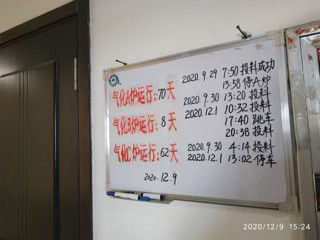
We offer end-to-end technical services, including operating data analytics, lining diagnostic assessments, and optimization strategies.
Gasification involves combining extreme high-temperature and high-pressure environments where refractory integrity directly dictates gasifier availability, campaign life, and operational safety. MRL addresses these critical challenges by delivering customized refractory configurations and integrated technical services to ensure stable, efficient, and sustained throughput.
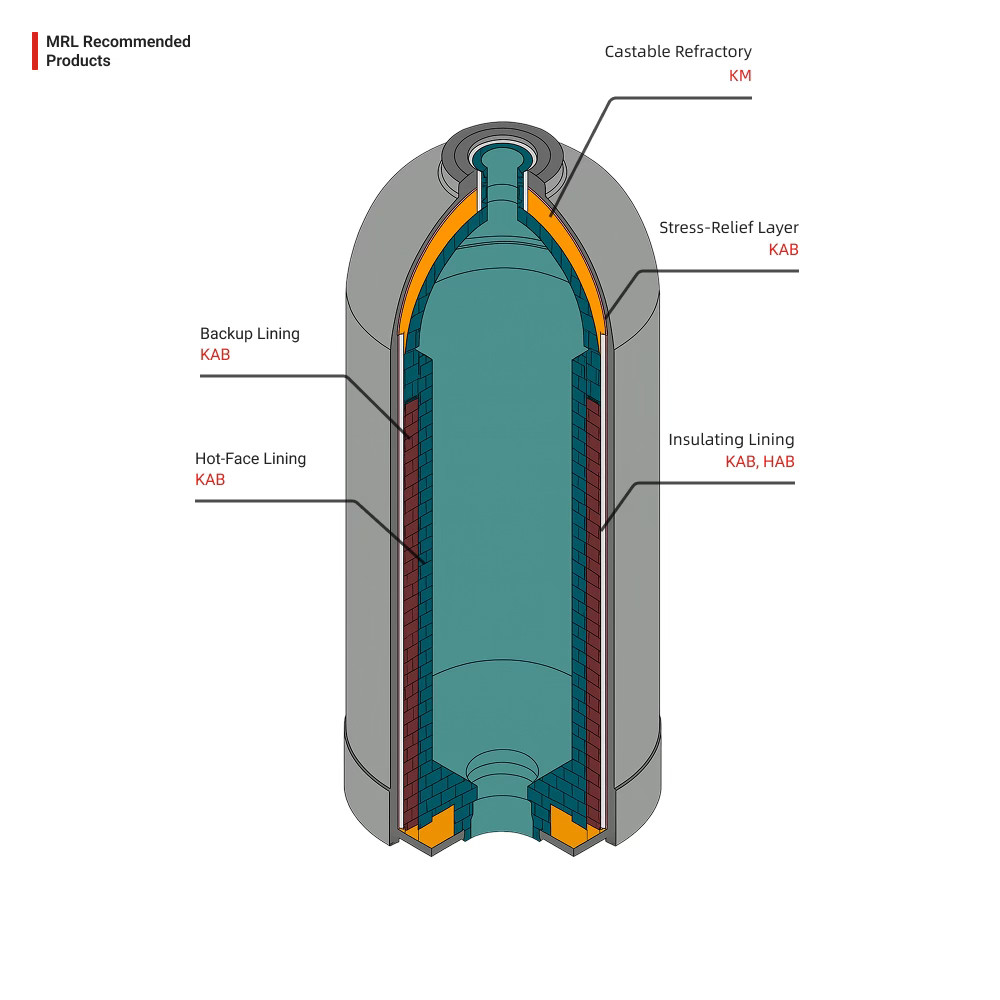
The dome and its transition area connecting to the barrel represent the most structurally complex and critical section of a gasifier. The refractory lining in this zone must support the structural dead load while withstanding continuous high-temperature radiation and severe thermal stress. Any minor design or material oversight in this area can lead to lining displacement or sealing failure, critically compromising overall gasifier safety.
Challenge
Featuring large curvature and non-uniform temperature profiles, this zone is highly susceptible to thermal stress concentration. Common failure modes include brick cracking, bulging, spalling, or structural deformation. In spherical domes, flame convergence often causes localized overheating, while the transition section is prone to lining failure due to expansion joint misalignment or steep stress gradients. Furthermore, upward syngas turbulence and aggressive slag splash intensify high-temperature abrasion and chemical attack.
Solution
MRL provides high-performance KAB series chrome-corundum bricks (e.g., KAB-65, KAB-85) engineered for exceptional thermal shock resistance and gas-tightness, making them the industry standard for dome applications. For geometrically intricate dome contours, KM series chrome-corundum castables are utilized for monolithic execution, eliminating weak joints and maximizing spalling resistance. At critical transition joints, ceramic fiber compression layers are strategically integrated to absorb expansion stress. For the insulation backing, HAB-99Q hollow alumina bricks are configured to minimize thermal conductivity and block slag penetration, significantly reducing the shell's thermal load.
Through this rigid–flexible structural design and multi-layer configuration, MRL effectively extends dome service life and maximizes campaign reliability.
Based on service conditions, MRL selects different grades and formulations even within the same series to ensure optimal performance by zone. Custom solutions are available—contact us for tailored support.
The barrel zone is the most uniformly heated area of the gasifier and serves as the primary reaction zone for gasification, typically requiring the longest continuous campaign period. Refractories in this section must not only withstand stable high temperatures and continuous abrasion but also demonstrate excellent thermomechanical fatigue resistance under fluctuating operating conditions. The durability of the lining in this high-wear zone ultimately defines the economic operating limits of the entire gasifier system.
Challenge
Solid particles entrained in the syngas cause continuous surface abrasion, which, combined with liquid slag erosion, easily leads to channeling grooves, triangular pitting, and edge wear on brick faces. Variations in process temperature and coal feedstock characteristics introduce severe thermal fatigue, accelerating joint degradation and brick displacement. Once lining integrity deteriorates, syngas penetration can cause localized overheating or shell blistering, posing severe safety risks while significantly increasing maintenance intensity and unplanned downtime costs.
Solution
For the barrel hot face, MRL provides KAB series high-chrome bricks (e.g., KAB-70, KAB-75) engineered with enhanced chemical corrosion resistance and structural stability for long-term wear zones. In areas highly sensitive to thermal shock, specialized chrome-corundum grades (e.g., KAB-85, KAB-90S) are configured to optimize resistance to thermal fatigue. High-strength, high-chrome mortars are applied at brick joints, combined with standardized installation practices to maximize sealing integrity. Backup safety layers utilize general-purpose KAB bricks to ensure robust structural support and thermal balance, while HAB series hollow alumina bricks are deployed for insulation to reduce shell temperature and maximize energy efficiency. Through this zoned material selection and optimized multi-layer design, the entire barrel system lifespan and economic performance are significantly enhanced.
Based on service conditions, MRL selects different grades and formulations even within the same series to ensure optimal performance by zone. Custom solutions are available—contact us for tailored support.
The bottom cone and slag outlet constitute the most severely loaded zones of the gasifier, where thermal load, mechanical erosion, and chemical attack are highly concentrated. This zone directly handles the containment and discharge of high-temperature molten slag and frequently acts as the bottleneck limiting overall lining campaign life—making its structural reliability critical to achieving sustained, stable gasifier operations.
Challenge
Under the combined effects of high temperature, high pressure, and intense fluid shear, bottom cone refractories are prone to accelerated wear, severe thinning, or structural instability. As the primary discharge pathway, the slag outlet is continuously exposed to gravity-driven liquid slag while experiencing severe pressure fluctuations and thermal cycling, leading to catastrophic thermal shock, cracking, and spalling. Insufficient lining stability in this choke point can cause pressure loss, slag outlet burn-through, forced shutdowns, or catastrophic safety incidents.
Solution
For the bottom cone, MRL prioritizes high-strength KAB-90S high-chrome bricks, which combine exceptional hot crushing strength, wear resistance, and corrosion resistance to withstand prolonged high-intensity operation. Where enhanced thermal shock resistance is required, specialized chrome-corundum bricks are applied in combination to balance thermal fatigue resistance and mechanical load capacity. The slag outlet is engineered with a monolithic lining of KM series chrome-corundum castables, forming a dense, joint-free barrier that maximizes gas-tightness and slag erosion resistance. Backing layers are coordinated with HAB-99Q hollow alumina bricks to maintain thermal insulation while preventing slag penetration from compromising shell temperature. In practice, MRL customizes brick geometries based on specific vessel configurations, optimizing fit and interlocking stability to significantly extend the service life of the entire lower furnace section.
Based on service conditions, MRL selects different grades and formulations even within the same series to ensure optimal performance by zone. Custom solutions are available—contact us for tailored support.
MRL provides high-performance refractory solutions tailored for advanced gasification systems, partnering with global leaders in the coal chemical and energy sectors. Leveraging proven field experience in extreme environments characterized by high temperatures, intense pressures, and severe slag abrasion, our refractories are engineered to excel across diverse gasifier designs and volatile operating conditions. By maximizing lining service life and minimizing unscheduled downtime, MRL ensures operational reliability, helping customers achieve stable, efficient, and sustained throughput in their gasification processes.
We provide customized refractory layout design for gasification systems to ensure precise heat-flow control and lining reliability.
We supply premium refractories engineered for extreme gasifier environments, with documented performance across major global projects.
We ensure standardized execution through on-site technical support and remote guidance to guarantee construction quality and efficiency.
We offer end-to-end technical services, including operating data analytics, lining diagnostic assessments, and optimization strategies.
Gasification involves combining extreme high-temperature and high-pressure environments where refractory integrity directly dictates gasifier availability, campaign life, and operational safety. MRL addresses these critical challenges by delivering customized refractory configurations and integrated technical services to ensure stable, efficient, and sustained throughput.
The dome and its transition area connecting to the barrel represent the most structurally complex and critical section of a gasifier. The refractory lining in this zone must support the structural dead load while withstanding continuous high-temperature radiation and severe thermal stress. Any minor design or material oversight in this area can lead to lining displacement or sealing failure, critically compromising overall gasifier safety.
Challenge
Featuring large curvature and non-uniform temperature profiles, this zone is highly susceptible to thermal stress concentration. Common failure modes include brick cracking, bulging, spalling, or structural deformation. In spherical domes, flame convergence often causes localized overheating, while the transition section is prone to lining failure due to expansion joint misalignment or steep stress gradients. Furthermore, upward syngas turbulence and aggressive slag splash intensify high-temperature abrasion and chemical attack.
Solution
MRL provides high-performance KAB series chrome-corundum bricks (e.g., KAB-65, KAB-85) engineered for exceptional thermal shock resistance and gas-tightness, making them the industry standard for dome applications. For geometrically intricate dome contours, KM series chrome-corundum castables are utilized for monolithic execution, eliminating weak joints and maximizing spalling resistance. At critical transition joints, ceramic fiber compression layers are strategically integrated to absorb expansion stress. For the insulation backing, HAB-99Q hollow alumina bricks are configured to minimize thermal conductivity and block slag penetration, significantly reducing the shell's thermal load.
Through this rigid–flexible structural design and multi-layer configuration, MRL effectively extends dome service life and maximizes campaign reliability.
Based on service conditions, MRL selects different grades and formulations even within the same series to ensure optimal performance by zone. Custom solutions are available—contact us for tailored support.
The barrel zone is the most uniformly heated area of the gasifier and serves as the primary reaction zone for gasification, typically requiring the longest continuous campaign period. Refractories in this section must not only withstand stable high temperatures and continuous abrasion but also demonstrate excellent thermomechanical fatigue resistance under fluctuating operating conditions. The durability of the lining in this high-wear zone ultimately defines the economic operating limits of the entire gasifier system.
Challenge
Solid particles entrained in the syngas cause continuous surface abrasion, which, combined with liquid slag erosion, easily leads to channeling grooves, triangular pitting, and edge wear on brick faces. Variations in process temperature and coal feedstock characteristics introduce severe thermal fatigue, accelerating joint degradation and brick displacement. Once lining integrity deteriorates, syngas penetration can cause localized overheating or shell blistering, posing severe safety risks while significantly increasing maintenance intensity and unplanned downtime costs.
Solution
For the barrel hot face, MRL provides KAB series high-chrome bricks (e.g., KAB-70, KAB-75) engineered with enhanced chemical corrosion resistance and structural stability for long-term wear zones. In areas highly sensitive to thermal shock, specialized chrome-corundum grades (e.g., KAB-85, KAB-90S) are configured to optimize resistance to thermal fatigue. High-strength, high-chrome mortars are applied at brick joints, combined with standardized installation practices to maximize sealing integrity. Backup safety layers utilize general-purpose KAB bricks to ensure robust structural support and thermal balance, while HAB series hollow alumina bricks are deployed for insulation to reduce shell temperature and maximize energy efficiency. Through this zoned material selection and optimized multi-layer design, the entire barrel system lifespan and economic performance are significantly enhanced.
Based on service conditions, MRL selects different grades and formulations even within the same series to ensure optimal performance by zone. Custom solutions are available—contact us for tailored support.
The bottom cone and slag outlet constitute the most severely loaded zones of the gasifier, where thermal load, mechanical erosion, and chemical attack are highly concentrated. This zone directly handles the containment and discharge of high-temperature molten slag and frequently acts as the bottleneck limiting overall lining campaign life—making its structural reliability critical to achieving sustained, stable gasifier operations.
Challenge
Under the combined effects of high temperature, high pressure, and intense fluid shear, bottom cone refractories are prone to accelerated wear, severe thinning, or structural instability. As the primary discharge pathway, the slag outlet is continuously exposed to gravity-driven liquid slag while experiencing severe pressure fluctuations and thermal cycling, leading to catastrophic thermal shock, cracking, and spalling. Insufficient lining stability in this choke point can cause pressure loss, slag outlet burn-through, forced shutdowns, or catastrophic safety incidents.
Solution
For the bottom cone, MRL prioritizes high-strength KAB-90S high-chrome bricks, which combine exceptional hot crushing strength, wear resistance, and corrosion resistance to withstand prolonged high-intensity operation. Where enhanced thermal shock resistance is required, specialized chrome-corundum bricks are applied in combination to balance thermal fatigue resistance and mechanical load capacity. The slag outlet is engineered with a monolithic lining of KM series chrome-corundum castables, forming a dense, joint-free barrier that maximizes gas-tightness and slag erosion resistance. Backing layers are coordinated with HAB-99Q hollow alumina bricks to maintain thermal insulation while preventing slag penetration from compromising shell temperature. In practice, MRL customizes brick geometries based on specific vessel configurations, optimizing fit and interlocking stability to significantly extend the service life of the entire lower furnace section.
Based on service conditions, MRL selects different grades and formulations even within the same series to ensure optimal performance by zone. Custom solutions are available—contact us for tailored support.
MRL provides high-performance refractory solutions tailored for advanced gasification systems, partnering with global leaders in the coal chemical and energy sectors. Leveraging proven field experience in extreme environments characterized by high temperatures, intense pressures, and severe slag abrasion, our refractories are engineered to excel across diverse gasifier designs and volatile operating conditions. By maximizing lining service life and minimizing unscheduled downtime, MRL ensures operational reliability, helping customers achieve stable, efficient, and sustained throughput in their gasification processes.
We provide customized refractory layout design for gasification systems to ensure precise heat-flow control and lining reliability.
We supply premium refractories engineered for extreme gasifier environments, with documented performance across major global projects.
We ensure standardized execution through on-site technical support and remote guidance to guarantee construction quality and efficiency.
We offer end-to-end technical services, including operating data analytics, lining diagnostic assessments, and optimization strategies.
Gasification involves combining extreme high-temperature and high-pressure environments where refractory integrity directly dictates gasifier availability, campaign life, and operational safety. MRL addresses these critical challenges by delivering customized refractory configurations and integrated technical services to ensure stable, efficient, and sustained throughput.
The dome and its transition area connecting to the barrel represent the most structurally complex and critical section of a gasifier. The refractory lining in this zone must support the structural dead load while withstanding continuous high-temperature radiation and severe thermal stress. Any minor design or material oversight in this area can lead to lining displacement or sealing failure, critically compromising overall gasifier safety.
Challenge
Featuring large curvature and non-uniform temperature profiles, this zone is highly susceptible to thermal stress concentration. Common failure modes include brick cracking, bulging, spalling, or structural deformation. In spherical domes, flame convergence often causes localized overheating, while the transition section is prone to lining failure due to expansion joint misalignment or steep stress gradients. Furthermore, upward syngas turbulence and aggressive slag splash intensify high-temperature abrasion and chemical attack.
Solution
MRL provides high-performance KAB series chrome-corundum bricks (e.g., KAB-65, KAB-85) engineered for exceptional thermal shock resistance and gas-tightness, making them the industry standard for dome applications. For geometrically intricate dome contours, KM series chrome-corundum castables are utilized for monolithic execution, eliminating weak joints and maximizing spalling resistance. At critical transition joints, ceramic fiber compression layers are strategically integrated to absorb expansion stress. For the insulation backing, HAB-99Q hollow alumina bricks are configured to minimize thermal conductivity and block slag penetration, significantly reducing the shell's thermal load.
Through this rigid–flexible structural design and multi-layer configuration, MRL effectively extends dome service life and maximizes campaign reliability.
Based on service conditions, MRL selects different grades and formulations even within the same series to ensure optimal performance by zone. Custom solutions are available—contact us for tailored support.
The barrel zone is the most uniformly heated area of the gasifier and serves as the primary reaction zone for gasification, typically requiring the longest continuous campaign period. Refractories in this section must not only withstand stable high temperatures and continuous abrasion but also demonstrate excellent thermomechanical fatigue resistance under fluctuating operating conditions. The durability of the lining in this high-wear zone ultimately defines the economic operating limits of the entire gasifier system.
Challenge
Solid particles entrained in the syngas cause continuous surface abrasion, which, combined with liquid slag erosion, easily leads to channeling grooves, triangular pitting, and edge wear on brick faces. Variations in process temperature and coal feedstock characteristics introduce severe thermal fatigue, accelerating joint degradation and brick displacement. Once lining integrity deteriorates, syngas penetration can cause localized overheating or shell blistering, posing severe safety risks while significantly increasing maintenance intensity and unplanned downtime costs.
Solution
For the barrel hot face, MRL provides KAB series high-chrome bricks (e.g., KAB-70, KAB-75) engineered with enhanced chemical corrosion resistance and structural stability for long-term wear zones. In areas highly sensitive to thermal shock, specialized chrome-corundum grades (e.g., KAB-85, KAB-90S) are configured to optimize resistance to thermal fatigue. High-strength, high-chrome mortars are applied at brick joints, combined with standardized installation practices to maximize sealing integrity. Backup safety layers utilize general-purpose KAB bricks to ensure robust structural support and thermal balance, while HAB series hollow alumina bricks are deployed for insulation to reduce shell temperature and maximize energy efficiency. Through this zoned material selection and optimized multi-layer design, the entire barrel system lifespan and economic performance are significantly enhanced.
Based on service conditions, MRL selects different grades and formulations even within the same series to ensure optimal performance by zone. Custom solutions are available—contact us for tailored support.
The bottom cone and slag outlet constitute the most severely loaded zones of the gasifier, where thermal load, mechanical erosion, and chemical attack are highly concentrated. This zone directly handles the containment and discharge of high-temperature molten slag and frequently acts as the bottleneck limiting overall lining campaign life—making its structural reliability critical to achieving sustained, stable gasifier operations.
Challenge
Under the combined effects of high temperature, high pressure, and intense fluid shear, bottom cone refractories are prone to accelerated wear, severe thinning, or structural instability. As the primary discharge pathway, the slag outlet is continuously exposed to gravity-driven liquid slag while experiencing severe pressure fluctuations and thermal cycling, leading to catastrophic thermal shock, cracking, and spalling. Insufficient lining stability in this choke point can cause pressure loss, slag outlet burn-through, forced shutdowns, or catastrophic safety incidents.
Solution
For the bottom cone, MRL prioritizes high-strength KAB-90S high-chrome bricks, which combine exceptional hot crushing strength, wear resistance, and corrosion resistance to withstand prolonged high-intensity operation. Where enhanced thermal shock resistance is required, specialized chrome-corundum bricks are applied in combination to balance thermal fatigue resistance and mechanical load capacity. The slag outlet is engineered with a monolithic lining of KM series chrome-corundum castables, forming a dense, joint-free barrier that maximizes gas-tightness and slag erosion resistance. Backing layers are coordinated with HAB-99Q hollow alumina bricks to maintain thermal insulation while preventing slag penetration from compromising shell temperature. In practice, MRL customizes brick geometries based on specific vessel configurations, optimizing fit and interlocking stability to significantly extend the service life of the entire lower furnace section.
Based on service conditions, MRL selects different grades and formulations even within the same series to ensure optimal performance by zone. Custom solutions are available—contact us for tailored support.