Engineering Design
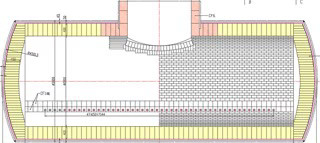
We deliver customized refractory and thermal designs for non-ferrous furnaces, tailored to diverse operating conditions.
MRL is dedicated to empowering the global non-ferrous metallurgy sector, partnering with leading smelters across a diverse spectrum of metals—including copper, lead, nickel, zinc, tin, and precious metal recovery. Given the intricate metallurgical pathways and specialized furnace requirements, MRL provides tailored refractory solutions for over ten distinct furnace categories. Our expertise in pyrometallurgical systems helps clients maximize campaign life, optimize operational costs, and ensure consistent, high-efficiency smelting performance.
We deliver customized refractory and thermal designs for non-ferrous furnaces, tailored to diverse operating conditions.
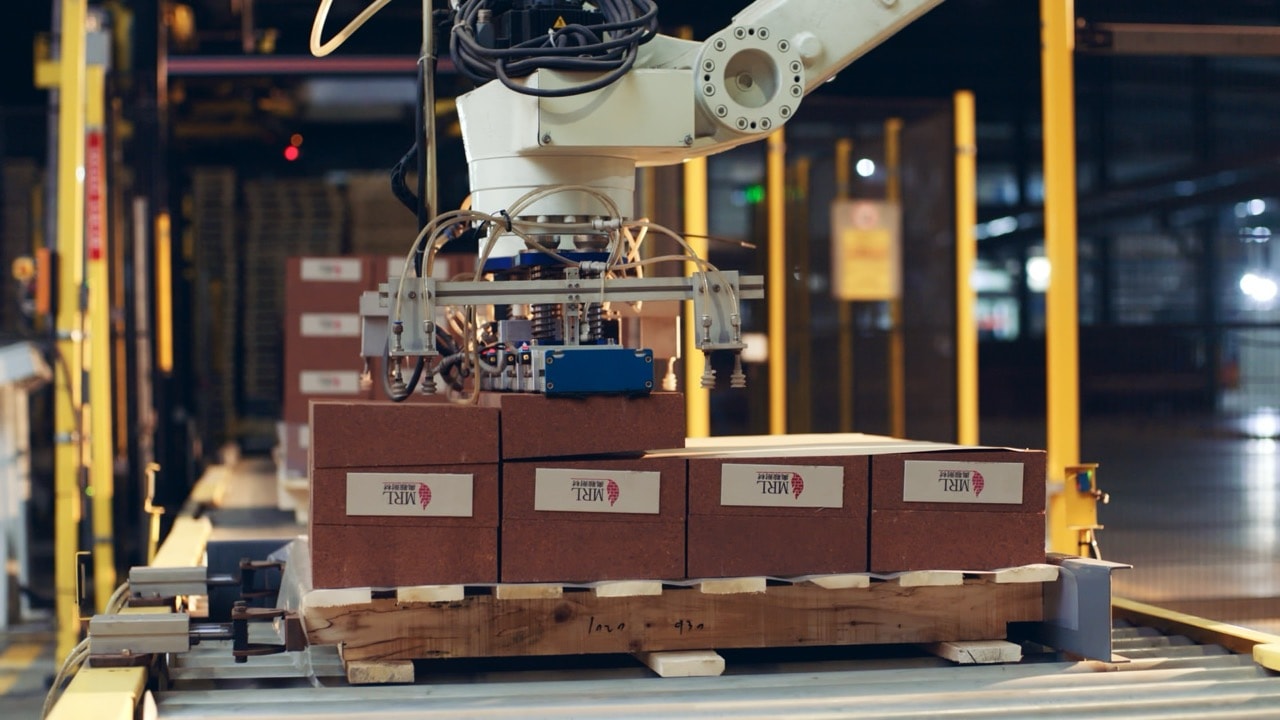
We offer a comprehensive portfolio of in-house developed refractory products engineered for smelting, converting, refining, and other critical furnace zones.
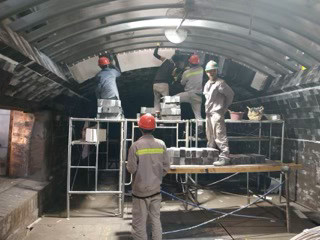
We deliver standardized installation, on-site support, and remote guidance to ensure construction quality and efficiency.
We provide full-cycle technical support to extend lining life, enhance performance, and reduce downtime risk.
Non-ferrous metallurgy requires diverse furnace designs and refractory solutions due to varied processes and metals. MRL specializes in pyrometallurgy, supporting over ten furnace types and will showcase through four typical units how we address thermal shock, slag erosion, and metal penetration with durable, low-maintenance refractory systems.
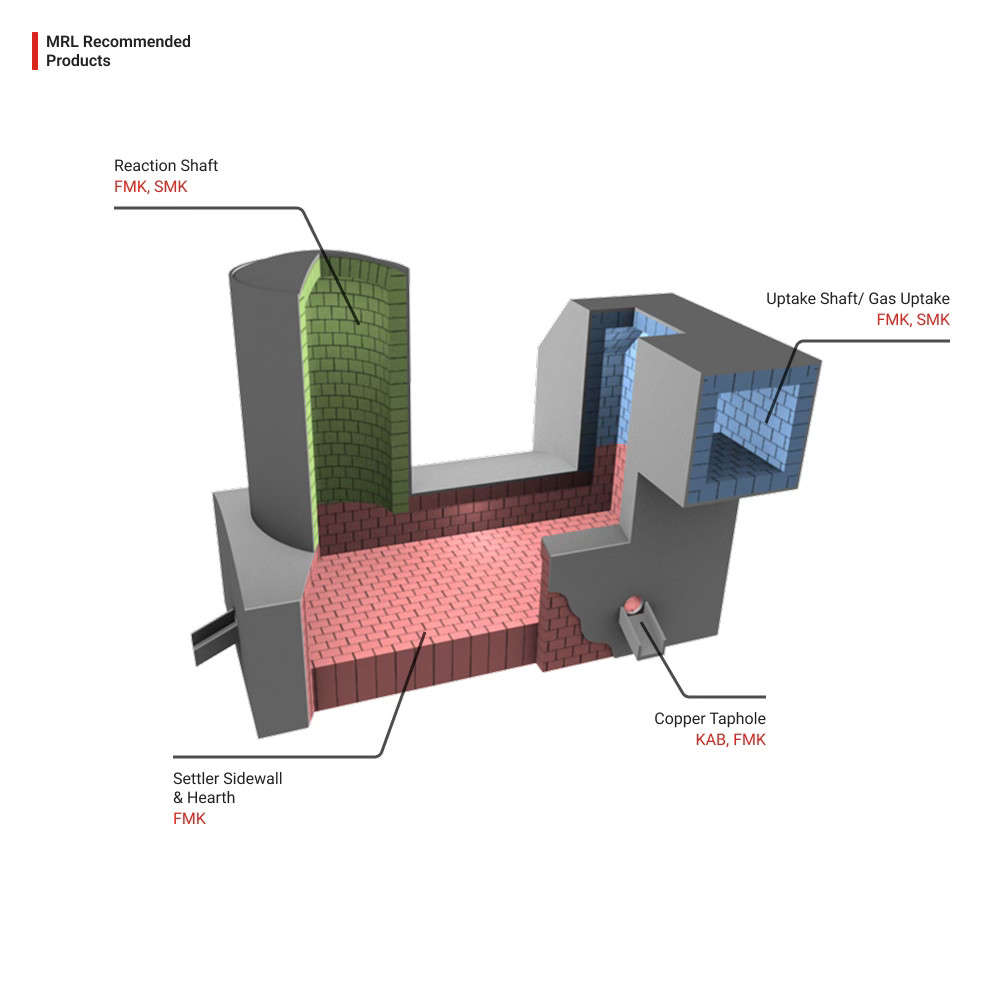
The flash smelting furnace is a core unit in copper and non-ferrous pyrometallurgy, responsible for rapid concentrate smelting, desulfurization, and primary slagging. It offers high efficiency, low emissions, and stable output, while its linings endure extreme temperatures, complex redox atmospheres, aggressive slag corrosion, and severe thermal shocks. The performance and reliability of its refractory lining are essential to sustaining continuous operation, stabilizing reaction kinetics, and maximizing campaign longevity under extreme thermal and chemical conditions.
Challenge & Solution
Reaction Shaft
The reaction shaft is continuously exposed to sulfide-induced chemical attack, SO₂-rich gases, melt impingement, and severe thermal shock, which places extremely high demands on chemical stability and thermal shock resistance of the lining materials. To ensure reliable long-term operation under such aggressive conditions. MRL applies FMK & SMK series bricks as the working lining, providing strong resistance to chemical corrosion, thermal cycling, and oxidizing atmospheres.
Settler Wall & Hearth
Operating under constant matte infiltration and aggressive high-temperature slag attack, the settler wall and hearth are prone to stress concentration and accelerated refractory wear. MRL selects FMK series bricks for these zones to enhance corrosion resistance and structural reliability, ensuring stable performance under combined chemical and thermal loads.
Uptake Shaft
The uptake shaft is subjected to continuous corrosive flue gas attack and cyclic thermal loading, which can lead to spalling and long-term structural fatigue. To address these challenges, FMK & SMK series materials are applied to improve resistance to flue-gas corrosion and thermal cycling, supporting sustained lining stability.
Tap Hole
Frequent tapping operations combined with intense erosion from molten matte and slag require refractories with both high abrasion resistance and thermal shock stability. MRL utilizes KAB & FMK series bricks in the tap hole area to ensure reliable wear resistance, thermal durability, and structural compatibility throughout repeated tapping cycles.
Based on service conditions, MRL selects different grades and formulations even within the same series to ensure optimal performance by zone. Custom solutions are available—contact us for tailored support.
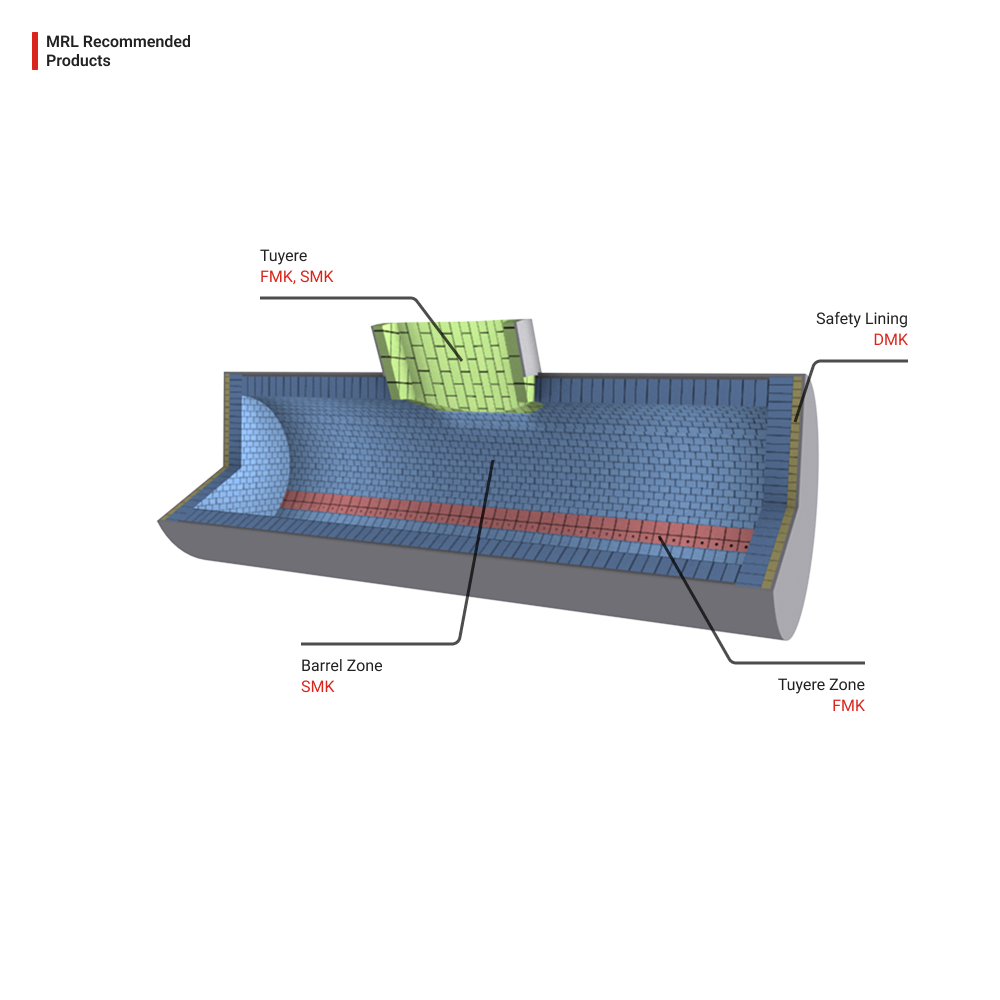
The PS converter is a key vessel in the copper smelting process, removing sulfur and iron from matte to produce blister copper. It endures severe operating conditions including intense melt turbulence and scouring, oxygen jetting, chemical attack, and frequent thermal cycling, demanding highly durable refractory linings.
Challenge & Solution
Tuyere
The tuyere is directly exposed to high-velocity oxygen injection, matte erosion, and severe thermal shock, making it one of the most wear-intensive and failure-prone areas in PS converters. MRL applies FMK & SMK series bricks, combining excellent resistance to melt attack, oxygen jet erosion, and thermal shock to ensure stable tuyere performance under continuous blowing conditions.
Tuyere Zone
Surrounding the tuyeres, this zone endures extreme local thermal gradients, turbulent melt flow, and cyclic oxidation–reduction conditions, leading to rapid lining degradation if material stability is insufficient. FMK series bricks are selected for the tuyere zone to provide strong slag resistance, thermal shock stability, and structural integrity under concentrated thermal and mechanical loads.
Barrel Zone
The barrel zone operates under sustained high temperatures, chemical corrosion from process gases, and mechanical stress from cyclic heating and cooling, which may cause lining instability or deformation over time. MRL utilizes SMK series bricks with balanced hot strength and oxidation resistance to maintain lining stability and support long-term campaign life.
Safety Lining
As the final protective barrier, the safety lining must provide reliable thermal insulation and structural stability to protect the converter shell under abnormal wear or local lining failure. DMK series bricks form a stable, low-risk safety lining system, offering consistent insulation performance and mechanical reliability to safeguard the converter structure during long-term service.
Based on service conditions, MRL selects different grades and formulations even within the same series to ensure optimal performance by zone. Custom solutions are available—contact us for tailored support.
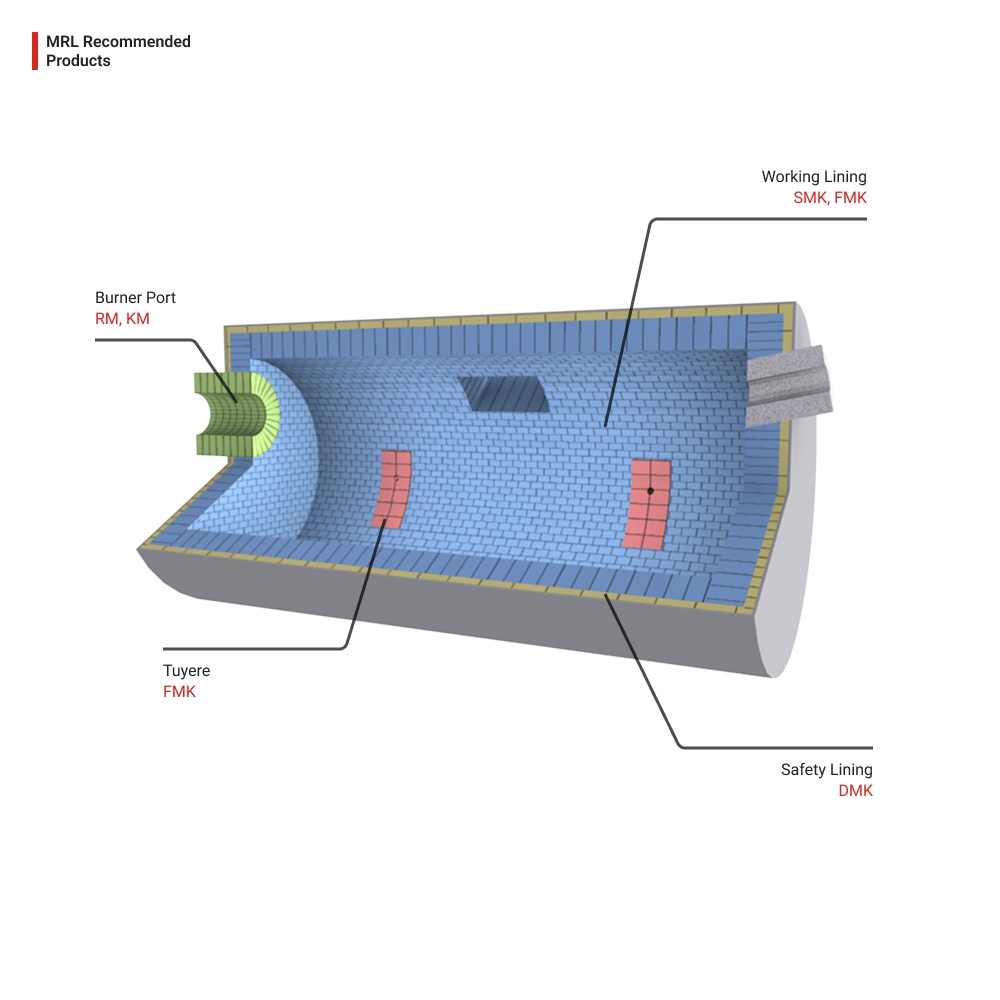
The anode furnace is a crucial unit for copper fire-refining, which removes impurities from blister copper through oxidation and reduction before casting. It operates under high-temperature melt turbulence, cyclic redox atmospheres, and severe thermal fluctuations, demanding refractories with exceptional chemical stability and thermal shock resistance.
Challenge & Solution
Burner Port
The burner port is directly exposed to high-temperature flame impingement, oxygen-rich atmospheres, and severe thermal shock, making it highly susceptible to spalling and chemical corrosion. MRL applies RM & KM series materials to provide enhanced resistance to copper/slag erosion and thermal stress, ensuring stable performance during frequent refining cycles.
Working Lining
The working lining operates under continuous high-temperature exposure and aggressive chemical interaction with molten copper and slag. The cyclic nature of refining leads to structural fatigue and lining degradation. MRL offers several high-performance options: FMK & SMK series bricks provide legendary slag resistance and thermal stability, while the KAB series chromia-corundum bricks offer a neutral refractory alternative with superior mechanical strength and resistance to acidic/neutral slag. These series are engineered to maintain structural integrity and support extended campaign life in demanding refining environments.
Tuyere
The tuyere experiences direct oxygen/reductant injection and intense interaction with the melt, resulting in extreme local thermal gradients and concentrated chemical stress. MRL utilizes FMK series materials with excellent resistance to gas jet erosion and molten metal attack, maintaining tuyere integrity and operational stability.
Safety Lining
As the final protective layer, the safety lining must ensure reliable thermal insulation and mechanical reliability to protect the furnace shell. DMK series bricks form a stable and durable safety lining system, offering consistent insulation performance and structural protection throughout the furnace campaign.
Based on service conditions, MRL selects different grades and formulations even within the same series to ensure optimal performance by zone. Custom solutions are available—contact us for tailored support.
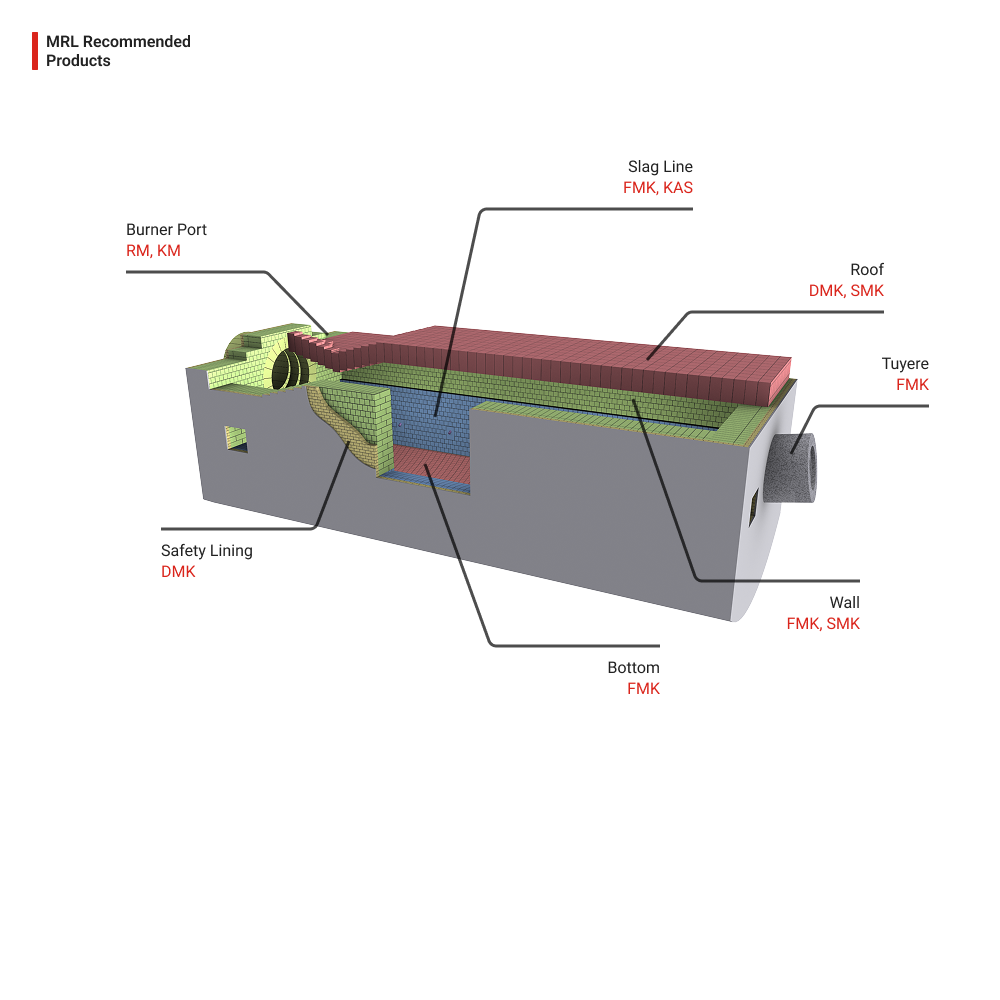
The tilting furnace is a key refining unit used for oxidation and reduction of blister copper, featuring molten copper tapping via furnace tilting. It operates under intense oxygen injection, slag interaction, and cyclic tilting-induced mechanical stress and thermal fatigue, demanding refractories with exceptional erosion resistance and structural reliability.
Challenge & Solution
Burner Port
The burner port is exposed to flame impingement, oxygen jetting, and severe thermal shock, making it highly prone to spalling and localized overloading. MRL applies RM & KM series materials to enhance resistance to flame erosion and thermal shock, ensuring stable performance under high heat flux conditions.
Slag Line
The slag line endures continuous attack from high-temperature slag and cyclic redox atmospheres, making it the most wear-intensive zone. MRL provides specialized material options including the FMK, KAS, and KAB series. While FMK and KAS series deliver exceptional stability against alkaline slags and thermal shock, the KAB series serves as a high-strength neutral barrier specifically designed for the aggressive acidic or neutral slags prevalent in non-ferrous smelting. Each series is optimized to prevent slag penetration and ensure long-term structural reliability under severe operating conditions.
Tuyere
The tuyere area faces direct oxygen injection and intense melt turbulence, resulting in aggressive chemical corrosion and mechanical erosion. MRL utilizes FMK series materials with superior oxidation resistance and thermal shock stability to maintain tuyere integrity under severe blowing conditions.
Roof
The roof experiences concentrated thermal stress, corrosive flue gas impingement, and frequent temperature fluctuations, which may lead to cracking or localized overloading. MRL applies DMK & SMK materials to enhance high-temperature strength and resistance to thermal stress accumulation in the roof area.
Wall
Furnace walls are continuously exposed to hot gases, volatile impurities, and mechanical fatigue from cyclic tilting, increasing the risk of cracking and spalling. FMK & SMK bricks provide a balanced combination of slag resistance, thermal shock tolerance, and structural stability to support long-term wall performance.
Bottom
The furnace bottom operates under high thermal loads and mechanical impact during charging, and the risk of slag accumulation, requiring strong load-bearing and anti-penetration properties. FMK series materials are used to reinforce bottom integrity, resisting both melt penetration and slag buildup to simplify maintenance and extend service life under combined stress.
Safety Lining
As the final protective barrier, the safety lining must ensure reliable insulation and mechanical stability to prevent heat transfer and shell damage. MRL standardizes the use of DMK series bricks to form a stable insulating layer that safeguards the furnace shell throughout long-term operation.
Based on service conditions, MRL selects different grades and formulations even within the same series to ensure optimal performance by zone. Custom solutions are available—contact us for tailored support.
MRL is dedicated to empowering the global non-ferrous metallurgy sector, partnering with leading smelters across a diverse spectrum of metals—including copper, lead, nickel, zinc, tin, and precious metal recovery. Given the intricate metallurgical pathways and specialized furnace requirements, MRL provides tailored refractory solutions for over ten distinct furnace categories. Our expertise in pyrometallurgical systems helps clients maximize campaign life, optimize operational costs, and ensure consistent, high-efficiency smelting performance.
We deliver customized refractory and thermal designs for non-ferrous furnaces, tailored to diverse operating conditions.
We offer a comprehensive portfolio of in-house developed refractory products engineered for smelting, converting, refining, and other critical furnace zones.
We deliver standardized installation, on-site support, and remote guidance to ensure construction quality and efficiency.
We provide full-cycle technical support to extend lining life, enhance performance, and reduce downtime risk.
Non-ferrous metallurgy requires diverse furnace designs and refractory solutions due to varied processes and metals. MRL specializes in pyrometallurgy, supporting over ten furnace types and will showcase through four typical units how we address thermal shock, slag erosion, and metal penetration with durable, low-maintenance refractory systems.
The flash smelting furnace is a core unit in copper and non-ferrous pyrometallurgy, responsible for rapid concentrate smelting, deep desulfurization, and primary slagging. It offers high efficiency, low emissions, and stable output, while its linings endure extreme temperatures, complex redox atmospheres, aggressive slag corrosion, and severe thermal shocks. The performance and reliability of its refractory lining are essential to sustaining continuous operation, stabilizing reaction kinetics, and maximizing campaign longevity under extreme thermal and chemical conditions.
Challenge & Solution
Reaction Shaft
The reaction shaft is continuously exposed to sulfide-induced chemical attack, SO₂-rich gases, melt impingement, and severe thermal shock, which places extremely high demands on chemical stability and thermal shock resistance of the lining materials. To ensure reliable long-term operation under such aggressive conditions. MRL applies FMK & SMK series bricks as the working lining, providing strong resistance to chemical corrosion, thermal cycling, and oxidizing atmospheres.
Settler Wall & Hearth
Operating under constant matte infiltration and aggressive high-temperature slag attack, the settler wall and hearth are prone to stress concentration and accelerated refractory wear. MRL selects FMK series bricks for these zones to enhance corrosion resistance and structural reliability, ensuring stable performance under combined chemical and thermal loads.
Uptake Shaft
The uptake shaft is subjected to continuous corrosive flue gas attack and cyclic thermal loading, which can lead to spalling and long-term structural fatigue. To address these challenges, FMK & SMK series materials are applied to improve resistance to flue-gas corrosion and thermal cycling, supporting sustained lining stability.
Tap Hole
Frequent tapping operations combined with intense erosion from molten matte and slag require refractories with both high abrasion resistance and thermal shock stability. MRL utilizes KAB & FMK series bricks in the tap hole area to ensure reliable wear resistance, thermal durability, and structural compatibility throughout repeated tapping cycles.
Based on service conditions, MRL selects different grades and formulations even within the same series to ensure optimal performance by zone. Custom solutions are available—contact us for tailored support.
The PS converter is a key vessel in the copper smelting process, removing sulfur and iron from matte to produce blister copper. It endures severe operating conditions including intense melt turbulence and scouring, oxygen jetting, chemical attack, and frequent thermal cycling, demanding highly durable refractory linings.
Challenge & Solution
Tuyere
The tuyere is directly exposed to high-velocity oxygen injection, matte erosion, and severe thermal shock, making it one of the most wear-intensive and failure-prone areas in PS converters. MRL applies FMK & SMK series bricks, combining excellent resistance to melt attack, oxygen jet erosion, and thermal shock to ensure stable tuyere performance under continuous blowing conditions.
Tuyere Zone
Surrounding the tuyeres, this zone endures extreme local thermal gradients, turbulent melt flow, and cyclic oxidation–reduction conditions, leading to rapid lining degradation if material stability is insufficient. FMK series bricks are selected for the tuyere zone to provide strong slag resistance, thermal shock stability, and structural integrity under concentrated thermal and mechanical loads.
Barrel Zone
The barrel zone operates under sustained high temperatures, chemical corrosion from process gases, and mechanical stress from cyclic heating and cooling, which may cause lining instability or deformation over time. MRL utilizes SMK series bricks with balanced hot strength and oxidation resistance to maintain lining stability and support long-term campaign life.
Safety Lining
As the final protective barrier, the safety lining must provide reliable thermal insulation and structural stability to protect the converter shell under abnormal wear or local lining failure. DMK series bricks form a stable, low-risk safety lining system, offering consistent insulation performance and mechanical reliability to safeguard the converter structure during long-term service.
Based on service conditions, MRL selects different grades and formulations even within the same series to ensure optimal performance by zone. Custom solutions are available—contact us for tailored support.
The anode furnace is a crucial unit for copper fire-refining, which removes impurities from blister copper through oxidation and reduction before casting. It operates under high-temperature melt turbulence, cyclic redox atmospheres, and severe thermal fluctuations, demanding refractories with exceptional chemical stability and thermal shock resistance.
Challenge & Solution
Burner Port
The burner port is directly exposed to high-temperature flame impingement, oxygen-rich atmospheres, and severe thermal shock, making it highly susceptible to spalling and chemical corrosion. MRL applies RM & KM series materials to provide enhanced resistance to copper/slag erosion and thermal stress, ensuring stable performance during frequent refining cycles.
Working Lining
The working lining operates under continuous high-temperature exposure and aggressive chemical interaction with molten copper and slag. The cyclic nature of refining leads to structural fatigue and lining degradation. MRL offers several high-performance options: FMK & SMK series bricks provide legendary slag resistance and thermal stability, while the KAB series chromia-corundum bricks offer a neutral refractory alternative with superior mechanical strength and resistance to acidic/neutral slag. These series are engineered to maintain structural integrity and support extended campaign life in demanding refining environments.
Tuyere
The tuyere experiences direct oxygen/reductant injection and intense interaction with the melt, resulting in extreme local thermal gradients and concentrated chemical stress. MRL utilizes FMK series materials with excellent resistance to gas jet erosion and molten metal attack, maintaining tuyere integrity and operational stability.
Safety Lining
As the final protective layer, the safety lining must ensure reliable thermal insulation and mechanical reliability to protect the furnace shell. DMK series bricks form a stable and durable safety lining system, offering consistent insulation performance and structural protection throughout the furnace campaign.
Based on service conditions, MRL selects different grades and formulations even within the same series to ensure optimal performance by zone. Custom solutions are available—contact us for tailored support.
The tilting furnace is a key refining unit used for oxidation and reduction of blister copper, featuring molten copper tapping via furnace tilting. It operates under intense oxygen injection, slag interaction, and cyclic tilting-induced mechanical stress and thermal fatigue, demanding refractories with exceptional erosion resistance and structural reliability.
Challenge & Solution
Burner Port
The burner port is exposed to flame impingement, oxygen jetting, and severe thermal shock, making it highly prone to spalling and localized overloading. MRL applies RM & KM series materials to enhance resistance to flame erosion and thermal shock, ensuring stable performance under high heat flux conditions.
Slag Line
The slag line endures continuous attack from high-temperature slag and cyclic redox atmospheres, making it the most wear-intensive zone. MRL provides specialized material options including the FMK, KAS, and KAB series. While FMK and KAS series deliver exceptional stability against alkaline slags and thermal shock, the KAB series serves as a high-strength neutral barrier specifically designed for the aggressive acidic or neutral slags prevalent in non-ferrous smelting. Each series is optimized to prevent slag penetration and ensure long-term structural reliability under severe operating conditions.
Tuyere
The tuyere area faces direct oxygen injection and intense melt turbulence, resulting in aggressive chemical corrosion and mechanical erosion. MRL utilizes FMK series materials with superior oxidation resistance and thermal shock stability to maintain tuyere integrity under severe blowing conditions.
Roof
The roof experiences concentrated thermal stress, corrosive flue gas impingement, and frequent temperature fluctuations, which may lead to cracking or localized overloading. MRL applies DMK & SMK materials to enhance high-temperature strength and resistance to thermal stress accumulation in the roof area.
Wall
Furnace walls are continuously exposed to hot gases, volatile impurities, and mechanical fatigue from cyclic tilting, increasing the risk of cracking and spalling. FMK & SMK bricks provide a balanced combination of slag resistance, thermal shock tolerance, and structural stability to support long-term wall performance.
Bottom
The furnace bottom operates under high thermal loads and mechanical impact during charging, and the risk of slag accumulation, requiring strong load-bearing and anti-penetration properties. FMK series materials are used to reinforce bottom integrity, resisting both melt penetration and slag buildup to simplify maintenance and extend service life under combined stress.
Safety Lining
As the final protective barrier, the safety lining must ensure reliable insulation and mechanical stability to prevent heat transfer and shell damage. MRL standardizes the use of DMK series bricks to form a stable insulating layer that safeguards the furnace shell throughout long-term operation.
Based on service conditions, MRL selects different grades and formulations even within the same series to ensure optimal performance by zone. Custom solutions are available—contact us for tailored support.
MRL is dedicated to empowering the global non-ferrous metallurgy sector, partnering with leading smelters across a diverse spectrum of metals—including copper, lead, nickel, zinc, tin, and precious metal recovery. Given the intricate metallurgical pathways and specialized furnace requirements, MRL provides tailored refractory solutions for over ten distinct furnace categories. Our expertise in pyrometallurgical systems helps clients maximize campaign life, optimize operational costs, and ensure consistent, high-efficiency smelting performance.
We deliver customized refractory and thermal designs for non-ferrous furnaces, tailored to diverse operating conditions.
We offer a comprehensive portfolio of in-house developed refractory products engineered for smelting, converting, refining, and other critical furnace zones.
We deliver standardized installation, on-site support, and remote guidance to ensure construction quality and efficiency.
We provide full-cycle technical support to extend lining life, enhance performance, and reduce downtime risk.
Non-ferrous metallurgy requires diverse furnace designs and refractory solutions due to varied processes and metals. MRL specializes in pyrometallurgy, supporting over ten furnace types and will showcase through four typical units how we address thermal shock, slag erosion, and metal penetration with durable, low-maintenance refractory systems.
The flash smelting furnace is a core unit in copper and non-ferrous pyrometallurgy, responsible for rapid concentrate smelting, desulfurization, and primary slagging. It offers high efficiency, low emissions, and stable output, while its linings endure extreme temperatures, complex redox atmospheres, aggressive slag corrosion, and severe thermal shocks. The performance and reliability of its refractory lining are essential to sustaining continuous operation, stabilizing reaction kinetics, and maximizing campaign longevity under extreme thermal and chemical conditions.
Challenge & Solution
Reaction Shaft
The reaction shaft is continuously exposed to sulfide-induced chemical attack, SO₂-rich gases, melt impingement, and severe thermal shock, which places extremely high demands on chemical stability and thermal shock resistance of the lining materials. To ensure reliable long-term operation under such aggressive conditions. MRL applies FMK & SMK series bricks as the working lining, providing strong resistance to chemical corrosion, thermal cycling, and oxidizing atmospheres.
Settler Wall & Hearth
Operating under constant matte infiltration and aggressive high-temperature slag attack, the settler wall and hearth are prone to stress concentration and accelerated refractory wear. MRL selects FMK series bricks for these zones to enhance corrosion resistance and structural reliability, ensuring stable performance under combined chemical and thermal loads.
Uptake Shaft
The uptake shaft is subjected to continuous corrosive flue gas attack and cyclic thermal loading, which can lead to spalling and long-term structural fatigue. To address these challenges, FMK & SMK series materials are applied to improve resistance to flue-gas corrosion and thermal cycling, supporting sustained lining stability.
Tap Hole
Frequent tapping operations combined with intense erosion from molten matte and slag require refractories with both high abrasion resistance and thermal shock stability. MRL utilizes KAB & FMK series bricks in the tap hole area to ensure reliable wear resistance, thermal durability, and structural compatibility throughout repeated tapping cycles.
Based on service conditions, MRL selects different grades and formulations even within the same series to ensure optimal performance by zone. Custom solutions are available—contact us for tailored support.
The PS converter is a key vessel in the copper smelting process, removing sulfur and iron from matte to produce blister copper. It endures severe operating conditions including intense melt turbulence and scouring, oxygen jetting, chemical attack, and frequent thermal cycling, demanding highly durable refractory linings.
Challenge & Solution
Tuyere
The tuyere is directly exposed to high-velocity oxygen injection, matte erosion, and severe thermal shock, making it one of the most wear-intensive and failure-prone areas in PS converters. MRL applies FMK & SMK series bricks, combining excellent resistance to melt attack, oxygen jet erosion, and thermal shock to ensure stable tuyere performance under continuous blowing conditions.
Tuyere Zone
Surrounding the tuyeres, this zone endures extreme local thermal gradients, turbulent melt flow, and cyclic oxidation–reduction conditions, leading to rapid lining degradation if material stability is insufficient. FMK series bricks are selected for the tuyere zone to provide strong slag resistance, thermal shock stability, and structural integrity under concentrated thermal and mechanical loads.
Barrel Zone
The barrel zone operates under sustained high temperatures, chemical corrosion from process gases, and mechanical stress from cyclic heating and cooling, which may cause lining instability or deformation over time. MRL utilizes SMK series bricks with balanced hot strength and oxidation resistance to maintain lining stability and support long-term campaign life.
Safety Lining
As the final protective barrier, the safety lining must provide reliable thermal insulation and structural stability to protect the converter shell under abnormal wear or local lining failure. DMK series bricks form a stable, low-risk safety lining system, offering consistent insulation performance and mechanical reliability to safeguard the converter structure during long-term service.
Based on service conditions, MRL selects different grades and formulations even within the same series to ensure optimal performance by zone. Custom solutions are available—contact us for tailored support.
The anode furnace is a crucial unit for copper fire-refining, which removes impurities from blister copper through oxidation and reduction before casting. It operates under high-temperature melt turbulence, cyclic redox atmospheres, and severe thermal fluctuations, demanding refractories with exceptional chemical stability and thermal shock resistance.
Challenge & Solution
Burner Port
The burner port is directly exposed to high-temperature flame impingement, oxygen-rich atmospheres, and severe thermal shock, making it highly susceptible to spalling and chemical corrosion. MRL applies RM & KM series materials to provide enhanced resistance to copper/slag erosion and thermal stress, ensuring stable performance during frequent refining cycles.
Working Lining
The working lining operates under continuous high-temperature exposure and aggressive chemical interaction with molten copper and slag. The cyclic nature of refining leads to structural fatigue and lining degradation. MRL offers several high-performance options: FMK & SMK series bricks provide legendary slag resistance and thermal stability, while the KAB series chromia-corundum bricks offer a neutral refractory alternative with superior mechanical strength and resistance to acidic/neutral slag. These series are engineered to maintain structural integrity and support extended campaign life in demanding refining environments.
Tuyere
The tuyere experiences direct oxygen/reductant injection and intense interaction with the melt, resulting in extreme local thermal gradients and concentrated chemical stress. MRL utilizes FMK series materials with excellent resistance to gas jet erosion and molten metal attack, maintaining tuyere integrity and operational stability.
Safety Lining
As the final protective layer, the safety lining must ensure reliable thermal insulation and mechanical reliability to protect the furnace shell. DMK series bricks form a stable and durable safety lining system, offering consistent insulation performance and structural protection throughout the furnace campaign.
Based on service conditions, MRL selects different grades and formulations even within the same series to ensure optimal performance by zone. Custom solutions are available—contact us for tailored support.
The tilting furnace is a key refining unit used for oxidation and reduction of blister copper, featuring molten copper tapping via furnace tilting. It operates under intense oxygen injection, slag interaction, and cyclic tilting-induced mechanical stress and thermal fatigue, demanding refractories with exceptional erosion resistance and structural reliability.
Challenge & Solution
Burner Port
The burner port is exposed to flame impingement, oxygen jetting, and severe thermal shock, making it highly prone to spalling and localized overloading. MRL applies RM & KM series materials to enhance resistance to flame erosion and thermal shock, ensuring stable performance under high heat flux conditions.
Slag Line
The slag line endures continuous attack from high-temperature slag and cyclic redox atmospheres, making it the most wear-intensive zone. MRL provides specialized material options including the FMK, KAS, and KAB series. While FMK and KAS series deliver exceptional stability against alkaline slags and thermal shock, the KAB series serves as a high-strength neutral barrier specifically designed for the aggressive acidic or neutral slags prevalent in non-ferrous smelting. Each series is optimized to prevent slag penetration and ensure long-term structural reliability under severe operating conditions.
Tuyere
The tuyere area faces direct oxygen injection and intense melt turbulence, resulting in aggressive chemical corrosion and mechanical erosion. MRL utilizes FMK series materials with superior oxidation resistance and thermal shock stability to maintain tuyere integrity under severe blowing conditions.
Wall
Furnace walls are continuously exposed to hot gases, volatile impurities, and mechanical fatigue from cyclic tilting, increasing the risk of cracking and spalling. FMK & SMK bricks provide a balanced combination of slag resistance, thermal shock tolerance, and structural stability to support long-term wall performance.
Roof
The roof experiences concentrated thermal stress, corrosive flue gas impingement, and frequent temperature fluctuations, which may lead to cracking or localized overloading. MRL applies DMK & SMK materials to enhance high-temperature strength and resistance to thermal stress accumulation in the roof area.
Bottom
The furnace bottom operates under high thermal loads and mechanical impact during charging, and the risk of slag accumulation, requiring strong load-bearing and anti-penetration properties. FMK series materials are used to reinforce bottom integrity, resisting both melt penetration and slag buildup to simplify maintenance and extend service life under combined stress.
Safety Lining
As the final protective barrier, the safety lining must ensure reliable insulation and mechanical stability to prevent heat transfer and shell damage. MRL standardizes the use of DMK series bricks to form a stable insulating layer that safeguards the furnace shell throughout long-term operation.
Based on service conditions, MRL selects different grades and formulations even within the same series to ensure optimal performance by zone. Custom solutions are available—contact us for tailored support.